The Smell That Isn't What You Think
If your pool smells "strongly of chlorine" and your kids are coming out with red eyes, the cause isn't too much chlorine. The cause is not enough.
That sharp, eye-stinging smell is chloramines. Chloramines form when chlorine reacts with organic stuff in the water: sweat, sunscreen, urine, body oils, hair products, kids' Goldfish crumbs. The reaction creates the irritating compounds people misidentify as "chlorine smell." Healthy pool water with adequate free chlorine has almost no smell.
If your kids have been blaming the pool, the pool is blaming you. Here's how to actually keep it safe for the family.
The Five Numbers That Matter
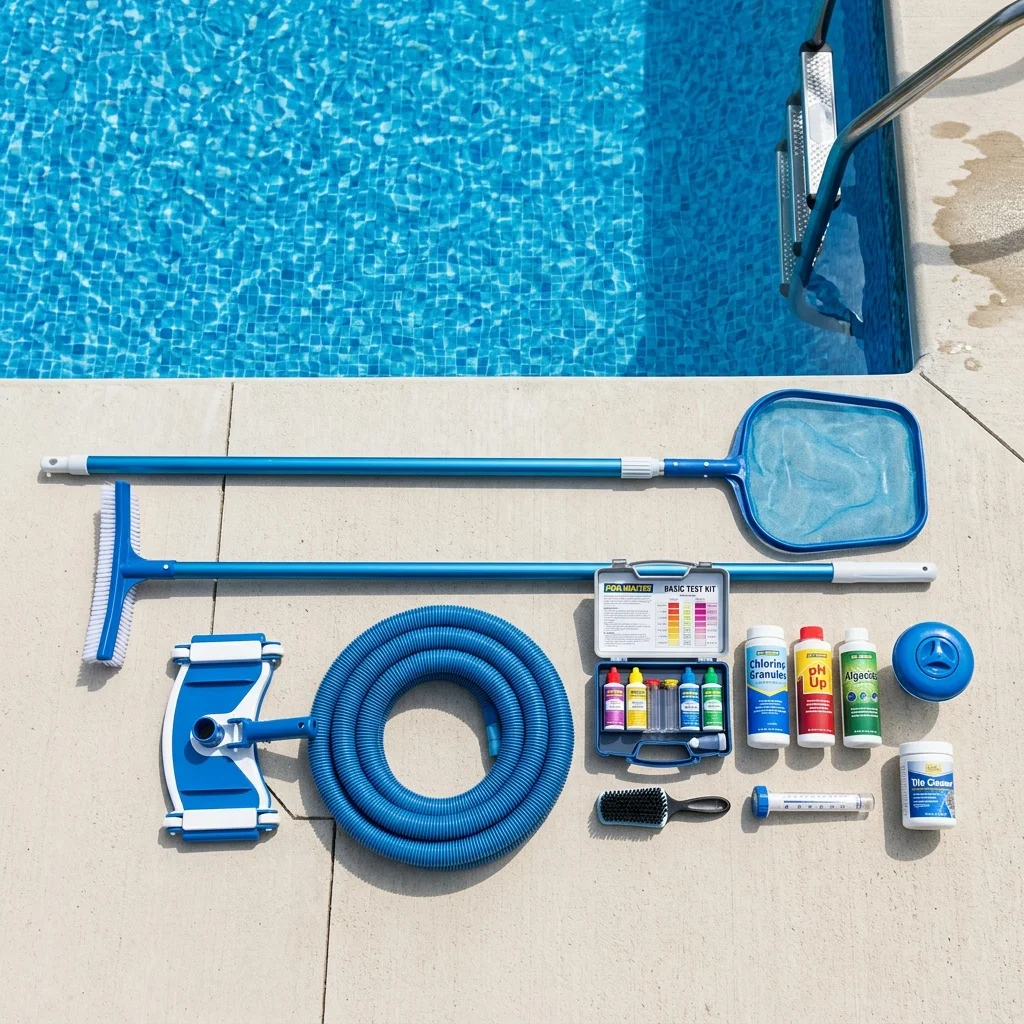
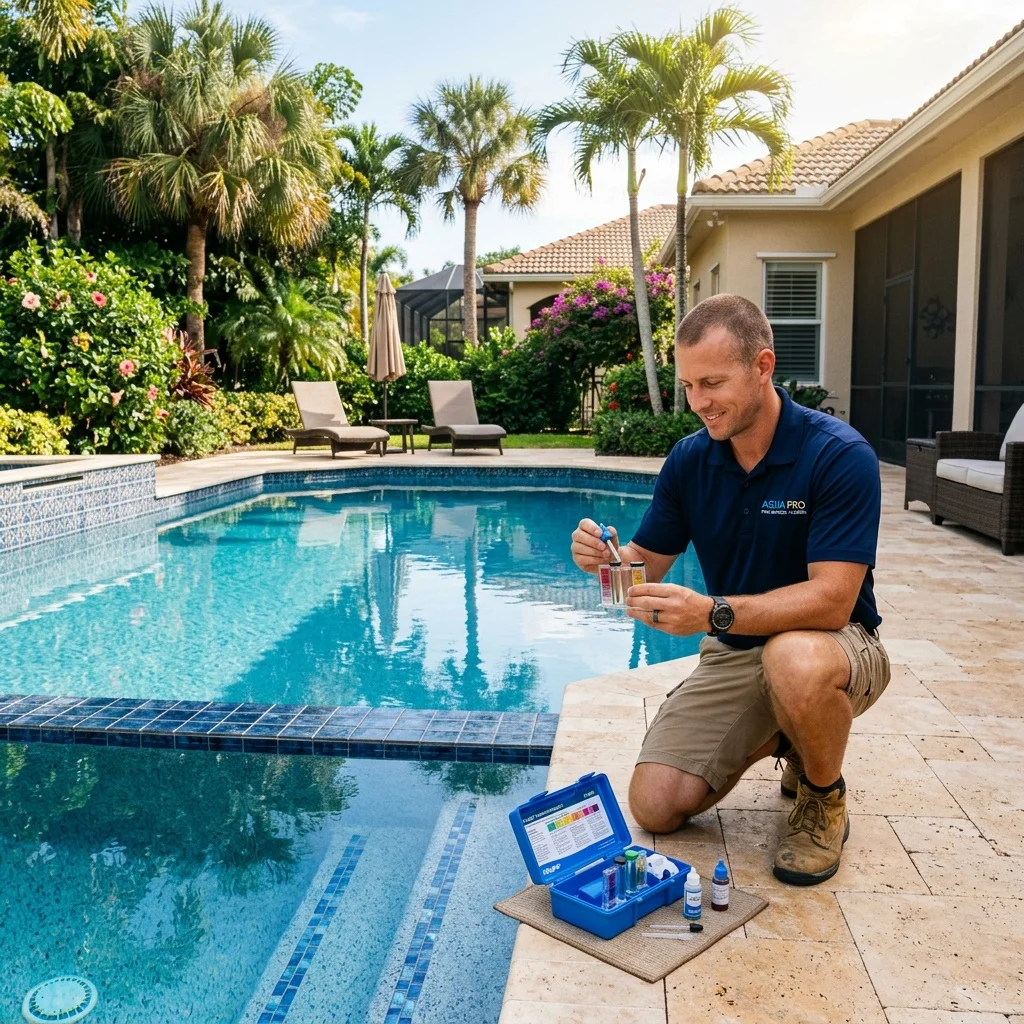
Most home test kits or strips measure 5 to 7 things. For family safety, focus on these five.
Free chlorine: 2 to 4 ppm. This is the active sanitizer. Below 1 ppm, bacteria multiply. Above 5 ppm, swimmers get skin irritation. Test before swimming, especially on hot days when chlorine burns off fast.
Combined chlorine (chloramines): below 0.5 ppm. This is the bad stuff. Combined chlorine is what causes the eye burn and chlorine smell. If your combined is above 0.5 ppm, your free chlorine isn't keeping up with the organic load. Solution: shock the pool.
pH: 7.4 to 7.6. pH controls how effective chlorine is and how comfortable the water feels on skin and eyes. Below 7.0 burns eyes and corrodes equipment. Above 7.8, chlorine doesn't sanitize well and calcium scales out.
Total alkalinity: 80 to 120 ppm. Alkalinity buffers pH. Without enough alkalinity, pH bounces around wildly with every rain or chemical addition. With too much, pH gets stuck high.
Cyanuric acid (CYA): 30 to 50 ppm. CYA protects chlorine from UV breakdown. Without it, the Florida sun burns through your chlorine in hours. Too much CYA (above 70) makes chlorine ineffective, even when the test says the chlorine level is fine.
What Each One Does to Your Family When It's Wrong
Knowing the numbers is one thing. Knowing what happens when they're off is what actually helps.
Chlorine too low: Bacteria, recreational water illnesses (cryptosporidium, giardia, E. coli), pink eye, ear infections, skin rashes.
Chlorine too high: Skin dryness, hair discoloration, irritation. Even "high" pool chlorine is far less concentrated than household bleach.
Chloramines too high: Red eyes, sinus irritation, asthma flares, that strong "chlorine" smell.
pH too low: Eye burning, skin irritation, etched plaster, corroded metal equipment.
pH too high: Cloudy water, scaling on tile and equipment, reduced chlorine effectiveness.
Alkalinity too low: Eye burning, unstable pH, surface etching.
Alkalinity too high: Cloudy water, hard-to-balance pH, calcium scale.
CYA too low: Chlorine burns off in hours, constant top-ups needed.
CYA too high: Chlorine present but ineffective, leading to algae growth despite "normal" chlorine readings.
Testing Frequency for a Family Pool
A pool with light residential use (2 to 4 swimmers a few times a week) needs testing 2 to 3 times per week. A pool with heavy family use (daily, multiple kids, occasional pool parties) needs testing every other day during summer.
Specific moments to test, no matter what:
- Before any planned pool party or group swim
- After heavy rain
- After a long sunny day where the pool got full sun
- After any sick swimmer used the pool
- Every Monday morning (most pools get the heaviest weekend use)
Use either a liquid drop kit (most accurate) or test strips (good enough for most weeks). Avoid pool store tests for routine monitoring. They're often selling chemistry, so they tend to recommend chemistry.
The Family-Specific Pool Load
Every person in the pool adds organic load. Rough estimates we work with:
- One adult swimming for 30 minutes: about 2 to 3 grams of organic material (sweat, oils, sunscreen).
- One kid swimming for an hour: 4 to 6 grams (more sweat, more sunscreen, more incidental swallowing).
- A dog: roughly the same organic load as 50 humans, plus fur. Don't let dogs swim regularly unless you're committed to extra sanitation.
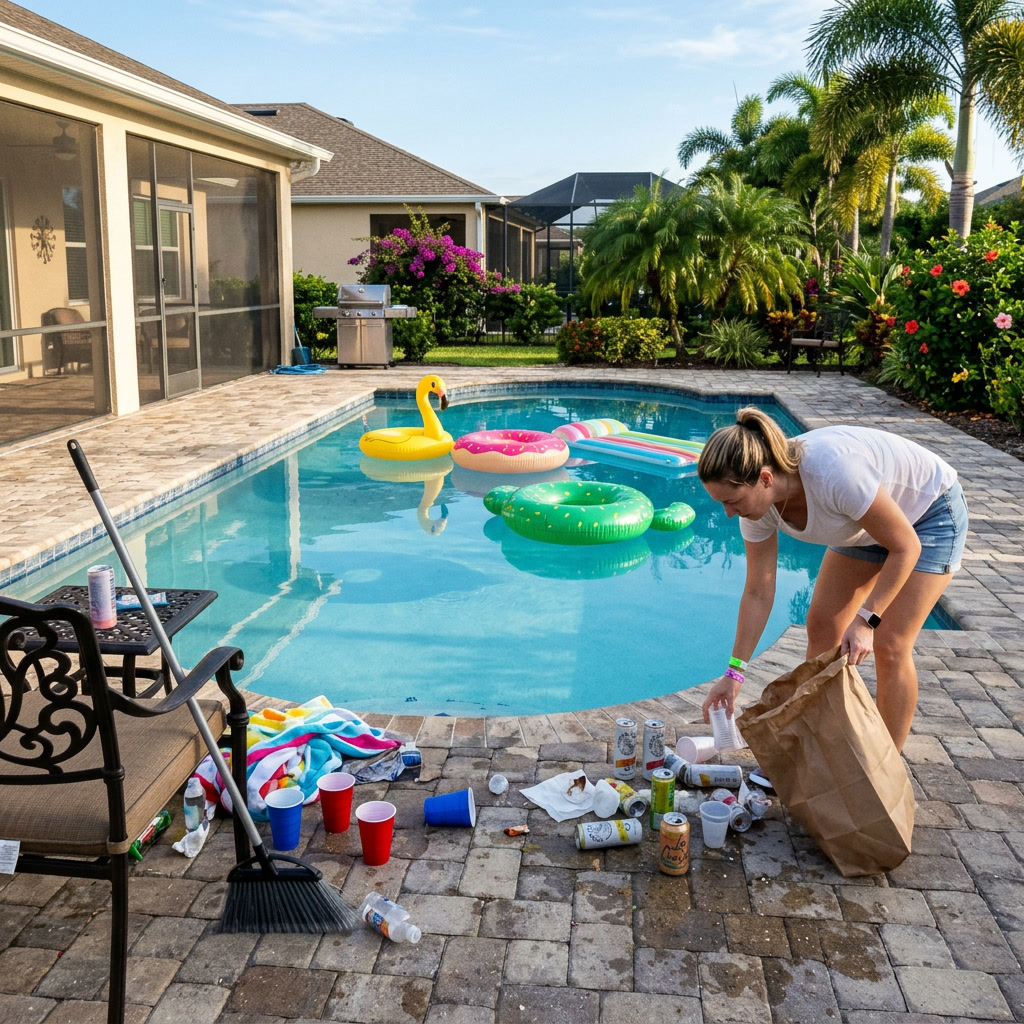
A pool party of 8 to 10 swimmers loads the pool with chemistry equivalent to several days of normal use, in 3 hours. Plan to shock after big group swims.
The Family Pool Care Routine That Works
If you take only one thing from this post, take this routine.
Monday morning: Test chlorine, pH, and combined chlorine. Adjust chlorine if low. If combined chlorine is above 0.5 ppm, shock that night.
Wednesday: Quick chlorine and pH test. Adjust if needed.
Friday afternoon: Test all five (chlorine, combined, pH, alkalinity, CYA monthly). Adjust before the weekend.
After any rain: Test chlorine within an hour. Florida rain dilutes everything.
After any pool party: Shock that evening, regardless of the chemistry reading.
Monthly: Test CYA and alkalinity. Adjust if drifting.
Five minutes, three times a week. That's all it takes for a safe family pool.
When to Keep Kids Out
A few situations where the pool isn't safe for swimming, even if it looks fine:
- Cloudy water you can't see the bottom of (visibility equals safety; drowning recovery requires visibility)
- Chlorine below 1 ppm
- Chlorine above 5 ppm
- After shocking, until chlorine drops back below 5 ppm (usually 12 to 24 hours)
- After any chemical addition, until water is fully circulated (run pump for at least 2 hours)
- If anyone has a stomach illness or open wound, until cleared
Florida pool deaths still happen. They're heartbreaking and almost always preventable. Pool safety is layered: fences, alarms, supervision, chemistry, swim lessons. Don't lean on one.
Symptoms That Tell You Chemistry Is Off
You don't always need a test kit to spot problems. The pool tells you.
- Strong chlorine smell: combined chlorine is high, free chlorine is probably low (shock the pool)
- Eye burning after swimming: pH and/or alkalinity is off
- Skin itching after swimming: chlorine is too high, OR pH is below 7.0
- Water cloudy after rain: chemistry shifted, test and adjust
- Green tint on the walls: algae is starting, shock soon
- White scale on tile line: pH and/or calcium hardness is too high
When you notice any of these, the test kit confirms what your senses already told you.
A Note on Pool Service Plans
If maintaining the five numbers every week sounds like work, it is. Not hard work, but persistent work. This is one of the main reasons families in St. Johns hire weekly pool service: a pro comes once a week, tests with calibrated tools, adjusts the chemistry, leaves you the readings. Your job becomes the daily quick check, which takes 60 seconds.
A weekly full-service plan in St. Johns County runs $150 to $225 a month, with chemistry handled. If your family uses the pool heavily, this is usually the more cost-effective option in both chemicals and time.
Want to stop guessing at your family's pool chemistry? Book a pool service in St. Johns, FL and we'll handle the weekly chemistry, leave you a written report after every visit, and keep your pool safe for the kids.