The Five-Minute Job That Prevents Half Your Pool Problems
The skimmer basket is the least sexy piece of pool equipment in your backyard. It's a plastic basket sitting in a hole at the side of the pool, catching leaves and bugs before they reach the pump.
It also prevents about 40 percent of pool problems if you handle it right and causes about 40 percent of pool problems if you ignore it.
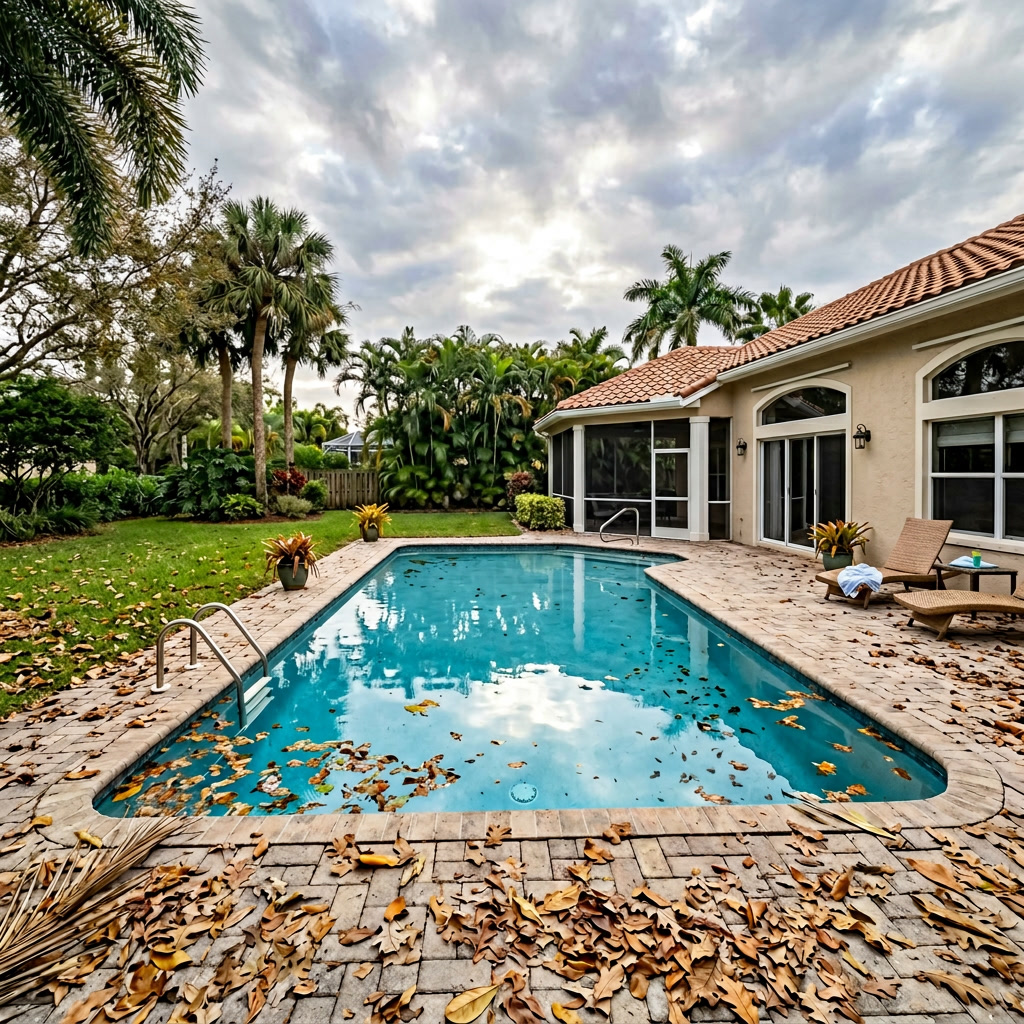
In St. Johns County, where most yards have oak trees, screen enclosures with mesh that traps debris, and a four-month pollen season, the skimmer basket job is more frequent and more important than the average pool blog admits.
Here's how to do it right.
What the Skimmer Basket Actually Does
Water flows from the pool into the skimmer (a built-in opening at the waterline), through the basket, then down to the pump. The basket catches debris before it reaches the pump impeller.
If the basket is full, three things happen in sequence:
- Water flow drops because the basket is clogged. Filtration slows. Chlorine doesn't distribute.
- The pump starts cavitating (sucking air mixed with water). Motor wears out faster.
- Eventually the pump loses prime entirely. Impeller spins dry. Seals burn out. You're now looking at a $500 to $1,200 pump repair.
A $0 maintenance task prevents a $1,000 problem. That's the math.
The Right Rhythm for St. Johns Pools
This depends on your yard. Three buckets:
No trees nearby, screened enclosure, no pets: every 3 to 4 days.
Some oaks or palms within 30 feet: every 1 to 2 days during leaf-drop seasons (March pollen, October leaf fall, anytime after wind), every 2 to 3 days otherwise.
Heavy oak canopy or unscreened pool: daily, especially February through April (pollen + oak catkins) and October through December (oak leaf drop).
Most Fruit Cove, Julington Creek, and older Mandarin homes fall into the third bucket. Most Nocatee, RiverTown, and Shearwater homes are bucket two thanks to younger trees. SilverLeaf depends on the phase.
How to Clean It (The Right Way)
Sounds basic. Most people get it wrong in one of the steps below.
Step 1: Turn off the pump
This matters. If you pull a clogged basket while the pump's running, debris that got past the basket gets sucked straight into the pump. Hit the pump switch first. Wait 10 seconds for flow to stop.
Step 2: Lift the basket straight up
Don't twist it. Don't yank. Twisting can crack the plastic; yanking can dislodge debris that then falls into the pump suction line. Two hands, straight up.
Step 3: Dump it into a trash bag, not the lawn
Two reasons. First, if you dump leaves on the lawn next to the pool, the next breeze blows them right back. Second, oak leaves and pollen are phosphate-rich (algae fuel). Dumping them next to a pool that's already fighting phosphates is shooting yourself in the foot.
Trash bag, sealed, in the can.
Step 4: Rinse the basket
Hose off any leftover debris stuck in the mesh. Look for cracks or holes in the basket while you're at it.
Step 5: Inspect the throat of the skimmer
Look down into the skimmer well. If there's debris in the bottom of the well (below where the basket sits), pull it out. Stuff in the throat will work its way to the pump even with the basket clean.
Step 6: Reseat the basket and prime
Drop the basket back in. Make sure it's seated flat against the skimmer floor (some baskets have a notch that has to line up). Restart the pump and check for prime within 30 seconds.
Common Mistakes
Pulling the basket with the pump running. Already covered. This is the single most common cause of pump cavitation.
Skipping the throat inspection. Debris settles below the basket and silently chokes flow. Once a month, look down into the well with a flashlight.
Letting one basket fail. If a basket cracks, water bypasses through the crack and pulls unfiltered debris into the pump. Replace cracked baskets immediately. They're $15 at any pool store and last 5 to 10 years if undamaged.
Forgetting the second skimmer. Many St. Johns pools have two skimmers, one on each end. Most homeowners only check the one closest to the pump pad. The far skimmer is usually the one that clogs because it gets the worst flow.
Adding skimmer socks without changing rhythm. Skimmer socks (mesh sleeves that slide over the basket) catch fine debris like pollen and oak catkins. They work great but they clog faster. If you add a sock, plan to clean more often, not less.
When the Basket Isn't the Problem
A few signs that you have a skimmer issue beyond the basket:
- The water level in the skimmer well is much lower than the pool water. Suggests an air leak somewhere in the suction line.
- You clean the basket and the pump still struggles to prime. Could be a clog further down the line, sometimes a stuck weir door (the little flap at the front of the skimmer).
- The skimmer is making a sucking, slurping noise. Either the pool water level is too low or there's a partial clog.
These usually need a service visit and a quick line inspection.
The Honest Pro Tip
The cleanest pools in St. Johns aren't the ones with the best pumps or the fanciest automation. They're the ones whose owners walk past the skimmer once a day, glance in, and dump it before they head inside.
It takes 90 seconds. It saves a lot of headaches.
Don't want to think about skimmer baskets twice a week? Book a pool service in St. Johns, FL and we'll empty both baskets at every visit, replace cracked baskets free of charge, and check the suction lines monthly.