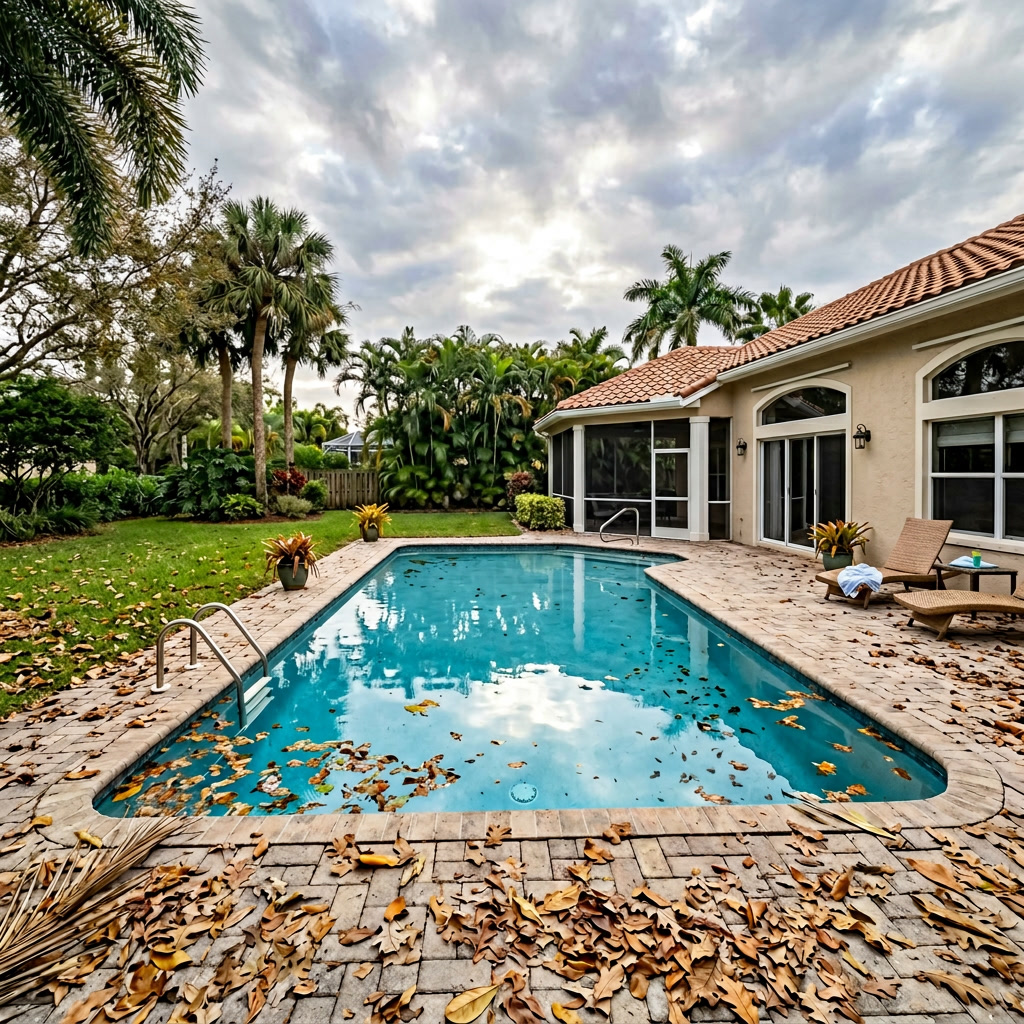
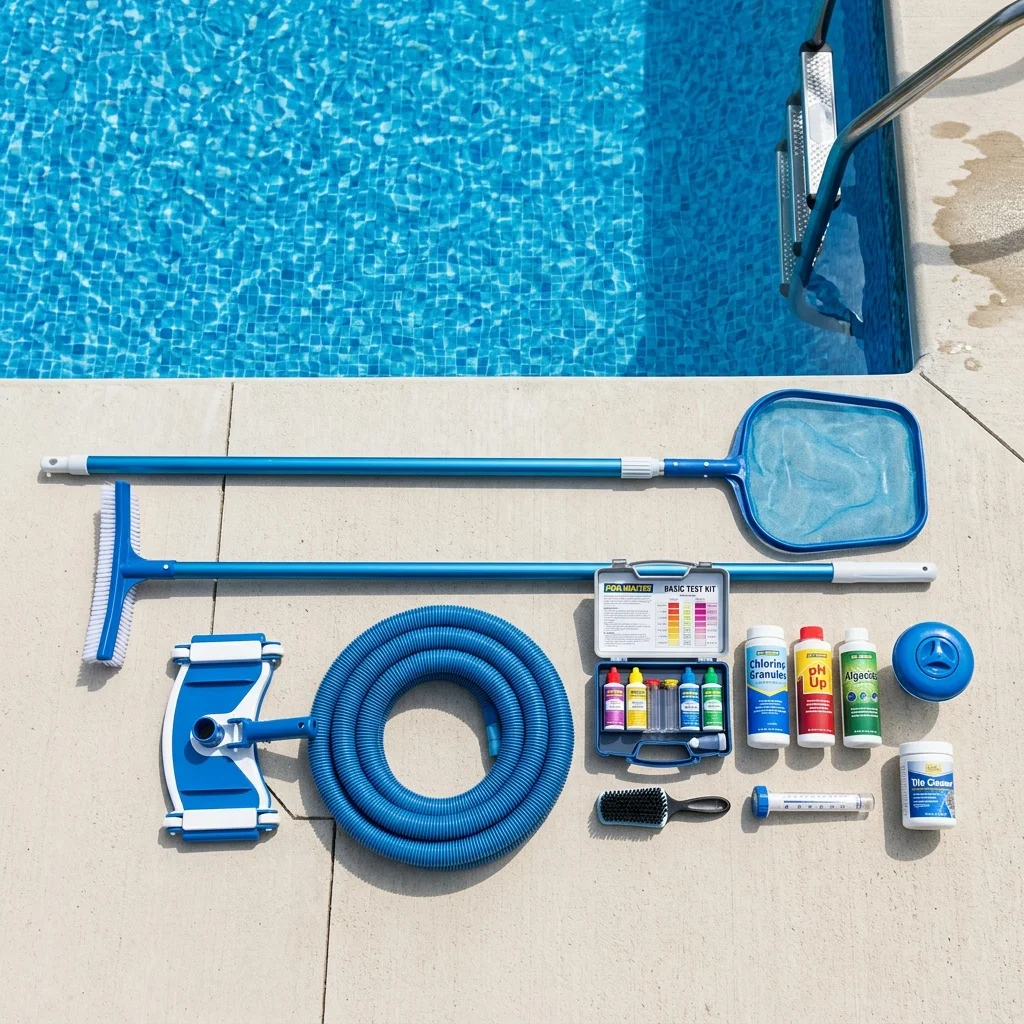
Florida Pools Don't "Open." They Wake Up.
If you moved to St. Johns from a state with real winters, your idea of "opening the pool" probably involves a cover, antifreeze, and a tense weekend of finding what's been growing in there since November. Welcome to Florida. We don't do that.
Florida pools never fully close. They just slow down. Which is good for the water (no algae explosion in April) and bad for the equipment (no clear handoff from "off" to "on"). Your March routine isn't a reopening. It's a wake-up.
Here's the actual checklist for getting a St. Johns pool ready for swim season, in the order it matters.
Step 1: The Full Chemistry Reset
Winter pools in Northeast Florida usually drift in three directions. Chlorine sits a little low because demand is low. CYA stays where it was. pH drifts up because nobody's been adjusting it.
Test for the full panel:
- Free chlorine
- Combined chlorine
- pH
- Total alkalinity
- Cyanuric acid (CYA)
- Calcium hardness (annually is fine)
- Salt (if you have a salt system)
Adjust pH down to 7.4 first. Then push free chlorine up to 3 to 5 ppm. If combined chlorine is over 0.5 ppm, shock that night with 2 to 3 gallons of liquid chlorine.
If CYA is below 30, add stabilizer to get it to 40 to 50. If CYA is over 70, plan a partial water exchange this month (10 to 20 percent) to dilute it down. High CYA going into summer makes chlorine ineffective when you need it most.
Step 2: The Big Brush
If you've been on minimal winter maintenance, biofilm has probably built up on the walls and steps even though the water looks clear. Brush the entire pool. Walls, floor, steps, behind ladders, light niches. Don't rush.
You'll see the water cloud up slightly as you brush. That's normal. The filter will handle it overnight.
Step 3: Empty Everything
Skimmer baskets, pump basket, leaf trap if you have one. Some of these have probably been holding the same handful of debris for months. Spring is the reset.
While you're in there, look at the skimmer basket itself. Plastic baskets crack with age and UV. Replacement is $15 to $30. Cheap. Worth doing now instead of after it shatters into the pump.
Step 4: The Filter Reset
Cartridge filter: pull the cartridge, hose it down, soak it in cartridge cleaner overnight, rinse thoroughly, reinstall. Or if it's pushing 18 months old and the post-clean pressure is creeping up, just replace it now. New cartridge before pollen season is $80 to $200 you'll be glad you spent.
DE filter: backwash, then add a fresh charge of DE powder per the manufacturer's specs.
Sand filter: backwash thoroughly. If sand is more than 4 years old, plan a replacement this summer.
Note your filter pressure right after cleaning. That's your new baseline for the year.
Step 5: Equipment Wake-Up
This is the step most homeowners skip.
Pump: Listen to it for a full minute. Steady hum is good. Whine, rattle, or stuttering is a bearing or impeller issue. Better to find that out in March than the day before a Memorial Day pool party.
Heater: Even if you don't plan to use it until April, fire it up for 20 minutes on a 70-degree day. Confirms it ignites and heats. A heater that's been sitting since November sometimes refuses to fire the first time you actually need it.
Salt system: Test the salt level. Inspect the cell for white calcium scaling on the plates. If scaling is visible, acid-clean the cell (4:1 water to muriatic acid, 15 minutes) before peak season.
Automation system: Cycle through any pre-set schedules. Make sure the timer is set for the new pump runtime (see step 6). Update any seasonal programs.
Step 6: Bump the Pump Runtime
Winter runtime in St. Johns is typically 4 to 6 hours a day. As water warms in March and April, push that up.
- March: 7 to 8 hours
- April: 8 to 10 hours
- May through September: 10 to 12 hours
- October to early November: 8 to 10 hours
- November to February: 4 to 6 hours
If you have a variable-speed pump, bump from "low filtration" up to "standard filtration" speed.
Step 7: Pre-Pollen Filter Strategy
Late February through mid-April is peak pollen season in St. Johns. Live oaks drop catkins (the brown stringy things) and pine trees release fine yellow pollen. Both end up in your pool and your filter.
Plan to:
- Empty skimmer baskets twice a week (not weekly) during pollen weeks.
- Run pump longer hours during peak pollen mornings.
- Clean the filter mid-pollen, even if pressure looks fine. Pollen compresses cartridges in ways the gauge doesn't always show.
Step 8: Pool Surface Inspection
Walk the perimeter of the pool deck. Look for:
- Cracks in coping (the edge stones)
- Loose tiles around the waterline
- Damage to the pool shell or liner
- Cracks in the deck near the pool
Small cosmetic issues, fine. Anything structural needs a pro's eye. Spring is when small issues are still small.
Step 9: Safety Check
Before the kids start using the pool again:
- Test the pool alarm or door alarm if you have one.
- Check the safety fence latch.
- Confirm the rescue equipment (ring buoy, reaching pole) is still where it should be.
- Look at the no-diving signage if your pool has it.
Florida has a pool drowning rate higher than almost any other state. Three minutes of safety check now is worth it.
Step 10: Get on a Service Schedule
Whether you DIY or hire a pro, March is when you decide what your spring routine is. The owners who get into trouble are the ones who handle the pool "when they remember." The ones who don't are the ones who have a set day and stick to it.
If DIY: pick a day. Sunday morning works for most. Block 45 minutes. Make it a habit.
If hiring: now's the time to lock in a service before everyone else thinks of it in April. Most St. Johns pool services book up in late March and don't take new accounts until June.
Specific to St. Johns Neighborhoods
Nocatee, RiverTown, Shearwater: Newer construction phases get hit with heavy pollen and residual construction dust through April. Add a second weekly filter cleaning.
Fruit Cove, Julington Creek: Mature live oaks. Catkins are the spring problem more than the pollen. Plan for daily skimmer basket checks during peak drop weeks.
Ponte Vedra, St. Augustine: Salt-air debris adds to the load. Salt cell cleaning before April is the move.
Mandarin, San Marco, Avondale: Older pools, often original plaster. Inspect the surface carefully during the spring brush.
The Pool Will Be Ready When You Are
A properly woken-up pool in March is one that's already clear, chemically balanced, and equipment-tested when the first warm afternoon hits in mid-April. The owners who do this work in March don't have a green pool emergency in May.
Want help with your spring pool opening? Book a pool service in St. Johns, FL and we'll handle the full wake-up, give you a baseline report, and put your pool on a weekly schedule before the busy season hits.