Your New Pool Has a First-Year Problem
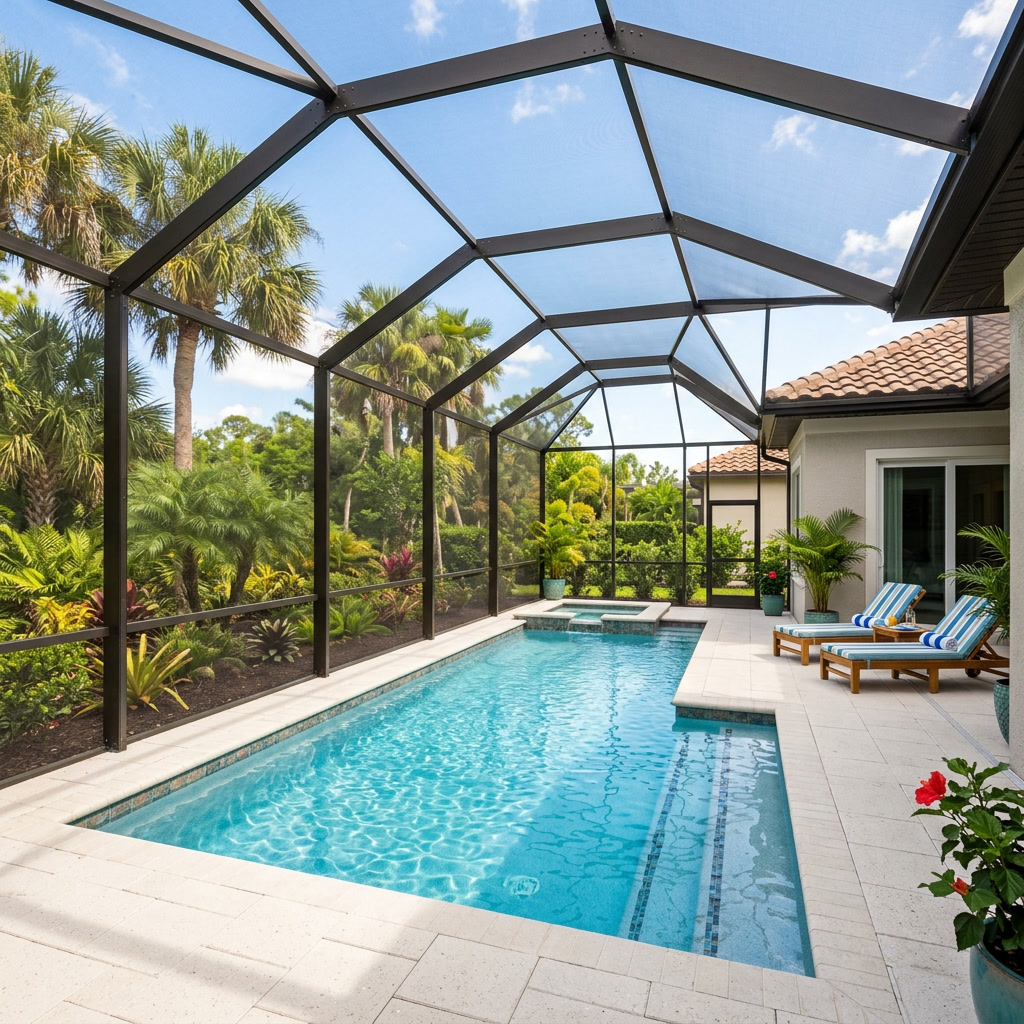
You just closed on a new build. The pool is gorgeous, the deck is spotless, and the landscaper's truck pulled out yesterday. Everything looks finished.
It's not.
For the next 12 to 18 months, your pool is going to be fighting the leftovers of construction: dust from neighboring lots, mortar and stucco residue, fresh sod fertilizer, mulch off-gas, and a plaster surface that's still chemically curing. Every one of these slowly degrades water and stains finishes if nobody's paying attention.
If you're in a phase that's still building out (most of Nocatee, RiverTown, SilverLeaf, the new corners of Shearwater and World Golf Village), this matters more than most homeowners realize.
What's Actually Happening in the Water
Plaster cure period (first 28 days, then 6 months)
Fresh plaster releases calcium for months. The first 28 days you're supposed to brush twice a day and keep pH on the lower end (7.2 to 7.4) to prevent scale. Most builders hand you a "startup card" and a small bag of stain treatment, then leave.
What you actually need to track in the first 6 months:
- pH twice weekly. Plaster pulls it up. If it pegs above 7.8, you'll get scaling on the tile line that takes a wet-pumice job to remove.
- Calcium hardness once a month. New plaster pools often climb past 400 ppm within the first quarter. Above 500 ppm and you're looking at calcium nodules and cloudy water.
- Brush the walls weekly even if it looks clean. The first six months you're polishing off cure dust that hasn't fully bonded.
Construction dust from active neighbors
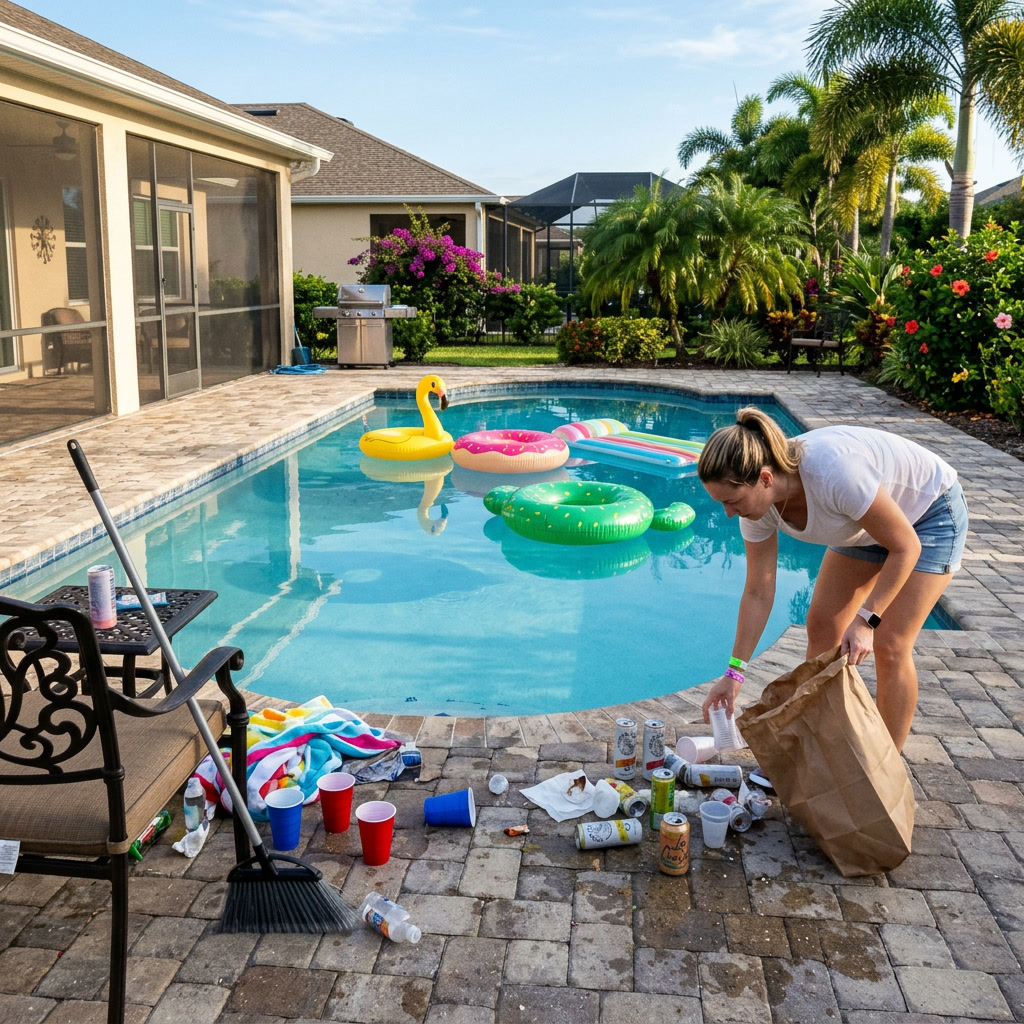
If there's still a build going on within a few hundred feet, fine concrete and stucco dust travels with the wind. It looks like a tan film on the water surface and a gray tinge along the waterline.
Concrete dust is high in calcium and alkaline. It raises pH and alkalinity, dulls the finish, and gunks up the skimmer baskets fast. You'll know it's an issue when you wipe the waterline tile and the rag comes back chalky.
Fresh sod and landscape runoff
The first round of sod gets hit with starter fertilizer and a lot of water. Most of it runs off the lot during the first month of rain. Phosphate levels in new-build pools routinely test between 600 and 1,500 ppb in the first year. That's algae fuel, and it explains why so many brand new pools turn green in their first July despite the owner doing everything they were told.
Mulch and pine straw
Fresh mulch off-gases for weeks. Pine straw drops fine needles that decompose into phosphates. Wind blows mulch dust into the pool, which compounds the runoff problem.
The First-Year Care Plan
If you're new to a St. Johns build and want to avoid the common screw-ups, here's the playbook.
Months 1 to 3
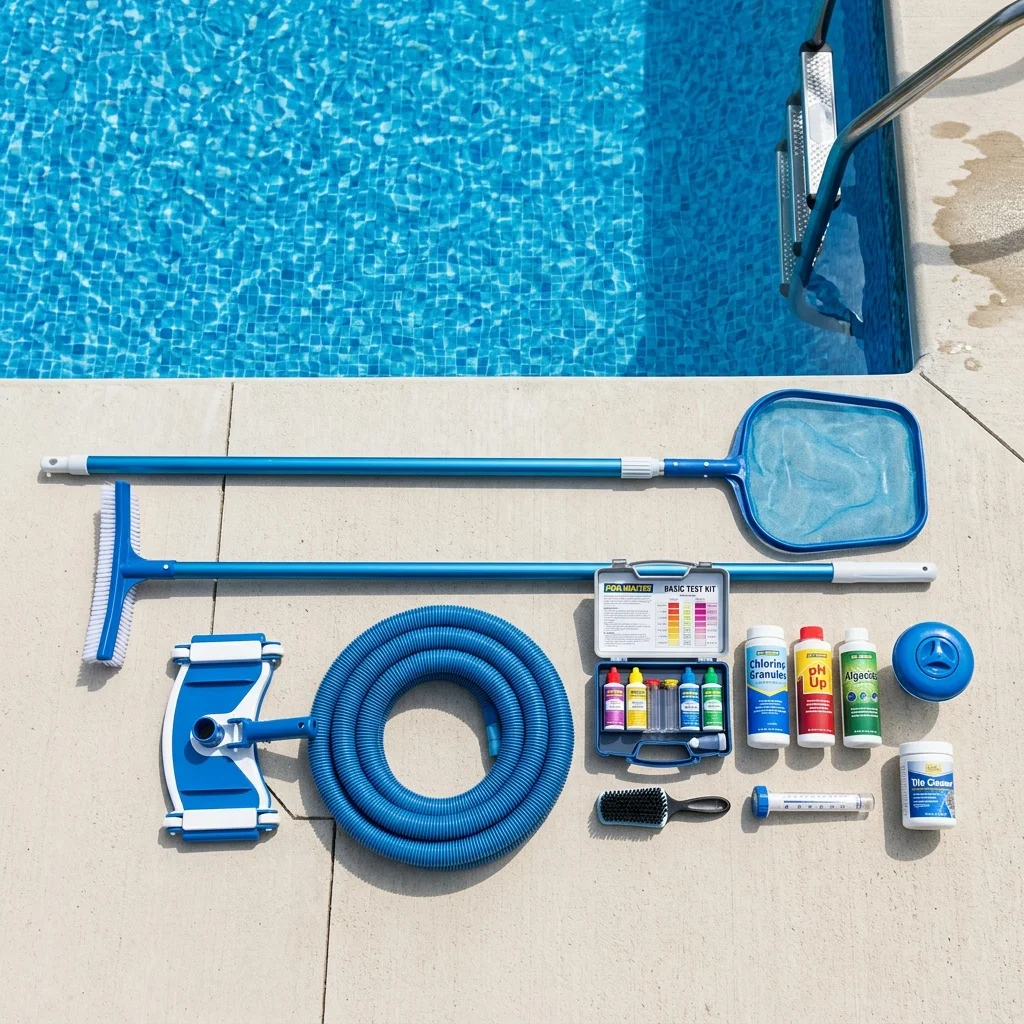
- Brush walls and floor twice a week, minimum. Plaster cure dust comes off the surface during this window.
- Test pH twice a week. Keep it 7.2 to 7.4. Add muriatic acid as needed.
- Test calcium hardness weekly. If it's climbing past 350, hold off on cal-hypo shock and use unstabilized liquid chlorine instead.
- Check the skimmer baskets every 2 to 3 days. Construction dust loads them faster than fall leaves.
- Backwash or clean the filter at the 30-day mark, even if pressure looks normal. The filter is full of cure dust.
Months 4 to 6
- Test phosphates for the first time around month 4. If above 300 ppb, do a phosphate remover treatment.
- Move pH testing to once a week, but keep it on the lower end (7.4 to 7.6).
- Brush weekly, vacuum biweekly if you don't have a robotic cleaner running daily.
- If your neighbors' lots are still being built, wipe the waterline tile every other week.
Months 7 to 12
- Treat the pool like a normal weekly maintenance pool: weekly chemistry, weekly brushing, monthly equipment check.
- One more deep filter clean at the one-year mark.
- Recheck phosphates. If they're back over 300, that's a sign you have ongoing landscape runoff and may need a permanent low-dose phosphate remover.
Common First-Year Screw-Ups
Trusting the builder's "startup card" past day 30. Builder-provided startup chemicals usually run out around the 4-week mark. After that, owners often go straight to weekly maintenance chemicals without adjusting for ongoing cure. The pool needs a more attentive routine for the first 6 months than the next 20 years combined.
Skipping the first filter clean. New-build filters are loaded with cure dust at 30 days. People look at the pressure gauge, see it normal, and skip the cleaning. Then at the 60-day mark the filter fails fast.
Using cal-hypo shock in a high-calcium pool. New plaster is already throwing calcium into the water. Cal-hypo (calcium hypochlorite) adds more. Use liquid chlorine instead during the first 6 months unless your hardness is actually low.
Not addressing phosphates until algae shows up. Phosphates from new-sod runoff stack up silently. The first time most homeowners hear about phosphates is when their pool goes green in spite of normal chlorine. By then you're doing a recovery job that costs more than a $40 test would have.
Setting pump runtime by what the builder said. The builder's runtime is for cool, low-bather, low-debris conditions. New-build pools running 6 hours a day during peak summer get into trouble. Run 8 to 10 hours April through October, 6 hours November through March.
When to Bring in a Pro
Look, you can run the first-year care yourself if you want to learn. Some new homeowners do, and they end up better operators than the average pool-store regular.
But if you don't want to spend the first year of your new house chasing pH and brushing plaster dust, this is the time when professional weekly service pays back the fastest. The cost of a first-year recovery (green pool plus stain remediation) is usually 4 to 6 months of regular service. Catching it weekly is cheaper than fixing it once it's wrong.
Just moved into a new build and want it set up right? Book a starter visit for pool service in St. Johns, FL and we'll handle the first-year care plan, give you a written baseline report, and adjust as the construction next door wraps up.