The Numbers Nobody Wants to Read
Florida loses more children to drowning than any other state. Drowning is the leading cause of accidental death for kids ages 1 to 4 in Florida. Most of those incidents happen in residential pools, in less than 5 minutes, with at least one adult on the property.
If you have a pool in Nocatee, RiverTown, SilverLeaf, Julington Creek, or any of the St. Johns communities, the math doesn't change because the neighborhood is nice. The summer we're heading into has the highest drowning risk of any season.
This isn't a fear post. It's a checklist. Walk it once with your spouse, walk it once before any visit from grandkids or friends with little kids, and most of the risk goes away.
Layer 1: Physical Barriers
Drowning prevention research consistently shows that physical barriers are the single most effective intervention. Florida law has minimums; the recommended best practice is stricter.
Pool fence around the water itself. A self-closing, self-latching, four-foot-minimum fence that goes around the pool (not just the yard) is the gold standard. Mesh removable fences run about $1,500 to $2,500 installed for an average backyard and pay for themselves the first time a toddler wanders away from a barbecue.
Door and window alarms. Any door that leads from the house to the pool deck should have an alarm. Inexpensive battery-powered ones from a hardware store work fine. The point isn't burglary detection; it's "a kid just opened the door."
Pool alarm in the water. Surface or sub-surface alarms detect motion in the pool itself. They're not a substitute for a fence, but they're a good third layer for grandparent houses where kids visit unexpectedly.
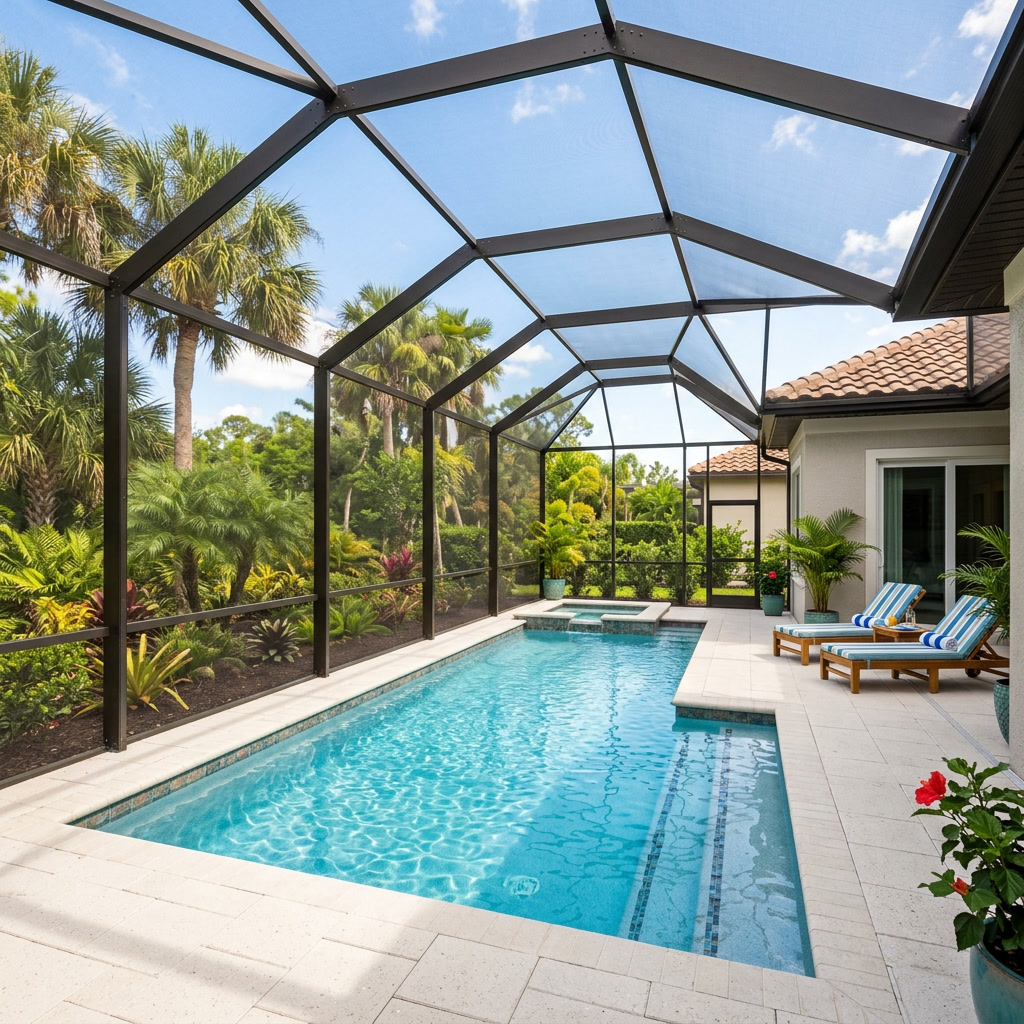
Self-closing screen enclosure doors. Florida-specific item. If you have a screen lanai (most St. Johns pools do), the door from the lanai to the rest of the deck or yard should self-close. A propped-open lanai door is the #1 way kids get pool access in a screen-enclosed home.
Cover storage. If you have a safety pool cover, make sure it's actually deployed when the pool's not in active use. A cover folded up by the pump pad is decoration.
Layer 2: Water Watcher Rules
The single biggest predictor of a drowning incident is "the adult thought somebody else was watching."
The water watcher protocol is simple:
- One adult is the designated water watcher. They wear a lanyard or a wristband ("Water Watcher" tag, available free from most St. Johns county health departments).
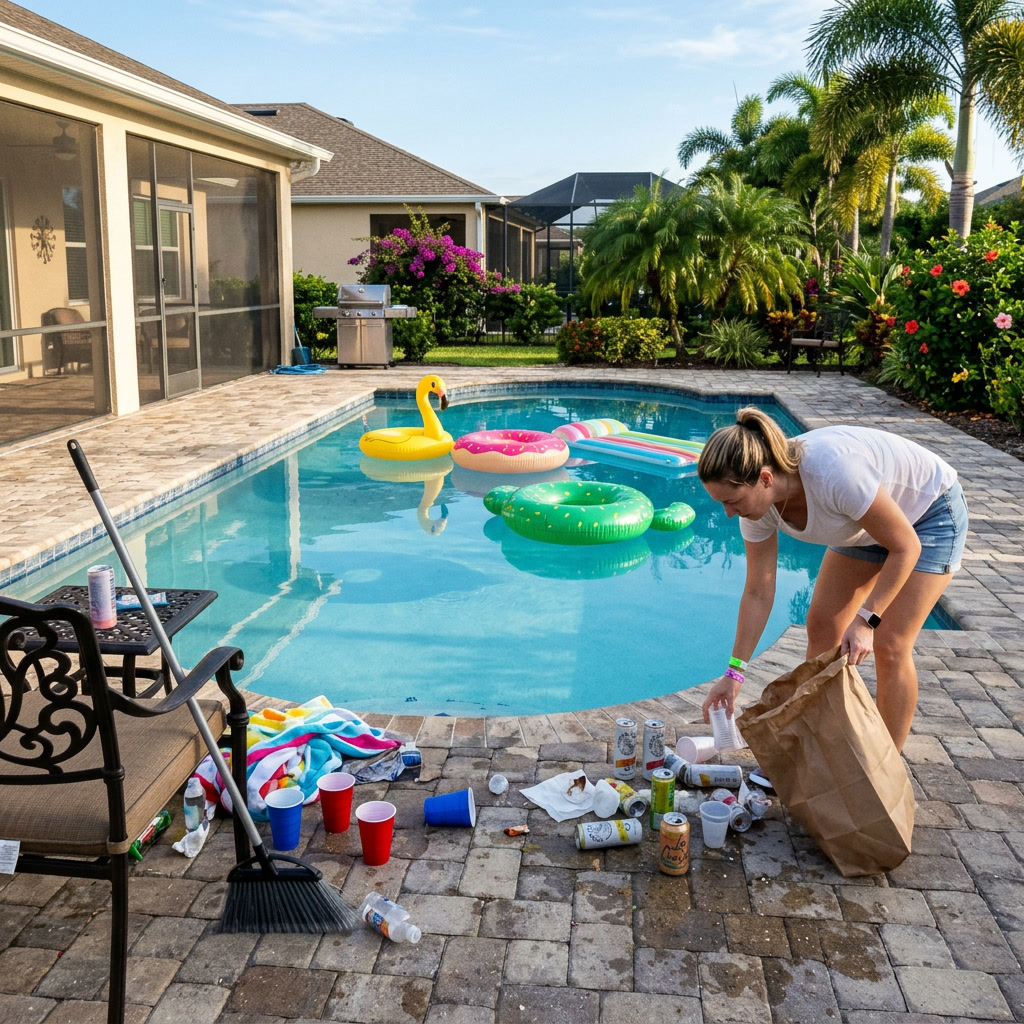
- The water watcher does not scroll their phone, drink alcohol, prep food, or hold a conversation that pulls eye contact away from the pool.
- The role rotates every 15 to 20 minutes. Tired eyes miss the silent slip-under.
- Hand off the tag physically. "You're up. Your watch."
- When swimming ends, the water watcher does the final perimeter walk before leaving the deck area.
This sounds like overkill. It's not. Drownings are silent. Real drownings don't involve splashing, yelling, or waving. They involve a kid going under and not coming back up while two adults are 10 feet away talking about something else.
Layer 3: Skill and Equipment
Swim lessons starting at age 1. Florida's "ISR" (Infant Swimming Resource) programs teach kids as young as 6 months to roll over and float. They work. There are several ISR-certified instructors in St. Johns. Even basic swim competence at age 2 to 3 dramatically reduces drowning risk.
Coast Guard approved life jackets. For weak swimmers and visiting kids whose ability you don't know, real life jackets (not pool toys, not inflatable arm bands) are the only flotation that actually saves lives. Arm bands and noodles are toys.
CPR certified adult on the property. At least one adult in the household should be current on CPR. Local fire stations and the Red Cross run classes for under $100 several times a month. If a drowning incident happens, CPR in the first 4 minutes is the difference between a hospital visit and a funeral.
Rescue equipment at the pool. A shepherd's hook (reach pole) and a ring buoy mounted on the lanai wall. Not in the shed. Not in the garage. On the wall where you can grab them in 3 seconds.
Phone within reach. You need to be able to call 911 without leaving the deck. If your phone lives in the kitchen, that's a 30-second delay you can't afford.
Layer 4: Equipment Safety
This is the boring layer everybody skips and then it shows up in the news.
Drain covers compliant with VGBA. Federal law since 2008. If your pool has a single main drain that's not an "anti-entrapment" cover, replace it. Costs about $40. Hair entanglement and disembowelment incidents from non-compliant drains are rare but catastrophic. Newer St. Johns pools should be compliant by code; older houses (pre-2010) often aren't.
Suction-side cleaner hoses checked. Pool cleaners with old, deteriorating hoses can develop dangerous suction at the joint. If a hose is more than 5 years old or visibly cracked, replace it.
Heater temperature limited. Set the pool heater to a max of 90 F. Kids and elderly visitors can suffer heat-related issues in water hotter than that, especially in long stays.
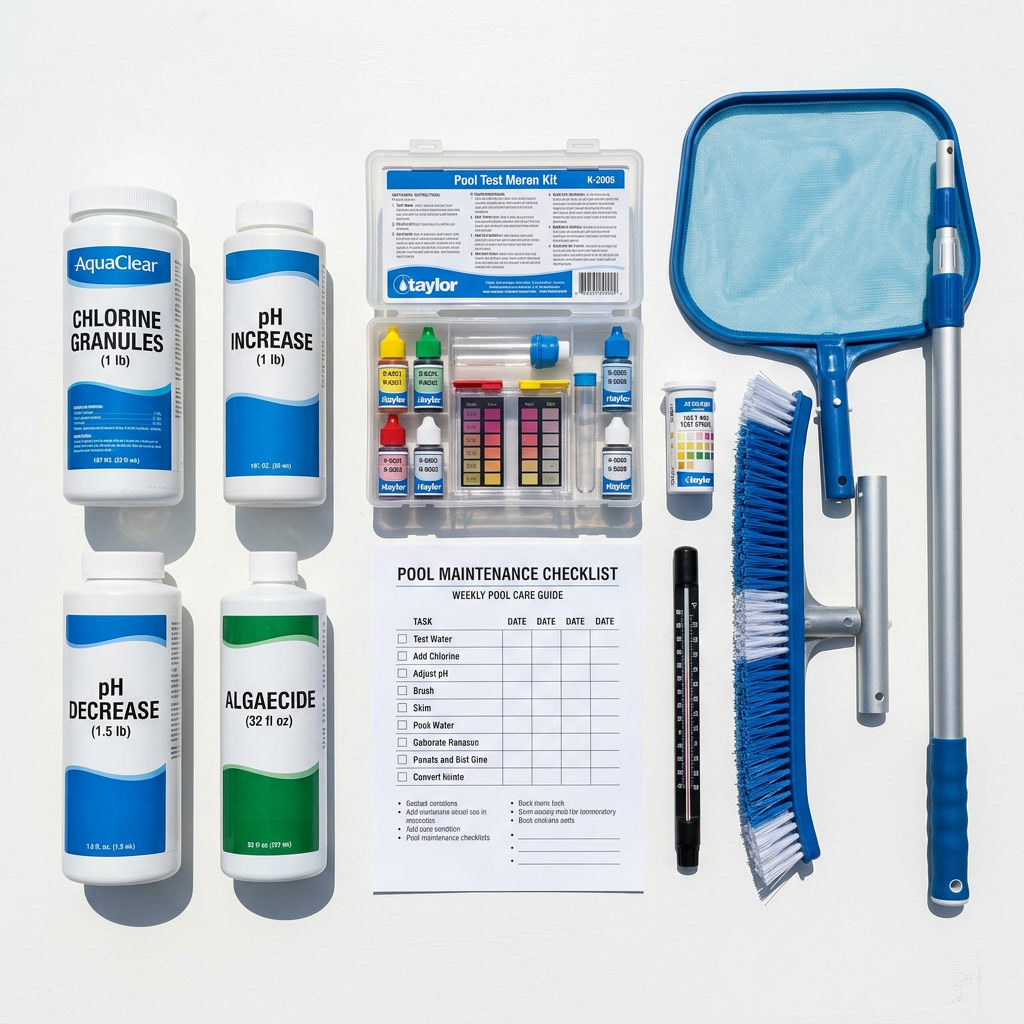
Chemical storage. Pool chemicals (chlorine, muriatic acid, cal-hypo) go in a locked, ventilated outdoor cabinet, not under the kitchen sink and not on a garage shelf where kids can reach. Liquid chlorine and muriatic acid create chlorine gas if accidentally mixed. The number of poison-control calls about pool chemicals from residential homes is higher than most parents realize.
Special Cases for St. Johns Backyards
Pools with attached spa. The spa-to-pool spillover is the most overlooked drowning risk in lanai pools. A toddler can fall into a spa even more easily than into the main pool, and the higher spa temperature makes it worse fast. Treat the spa as its own watched body of water.
Pools with attached sun shelves. Beautiful design, real risk. The 6-inch deep sun shelf is where parents put toddlers thinking it's safe. It is, until the toddler stands up and walks off the edge. Sun shelves require active watching, not "you can leave them on the shelf."
Pools backing to ponds or retention. Many St. Johns subdivisions have retention ponds adjacent to fenced yards. Make sure the rear yard fence is solid and the gate latches are out of reach.
Pools with attached bird/screen enclosures. False sense of security. The screen keeps bugs out, not toddlers in. A kid can absolutely fall in a screened pool. Treat it like an open pool for safety planning.
A Final Note
Every Memorial Day weekend, somebody on the local news has a story that didn't have to happen. Most pool drownings are preventable. Most preventions are layered, cheap, and quick to set up.
Walk the checklist this weekend before the kids show up. Tell every guest the rules out loud when they arrive. Designate the water watcher and hand them the tag. Have the rescue gear on the wall. Have the phone on the deck.
The pool is supposed to be the best part of the summer. Don't let it be anything else.
Want a safety walk-through during your weekly service? Book a pool service in St. Johns, FL and we'll include a safety audit on the first visit: drain compliance, equipment check, fence/gate review, and a written checklist you can use when family visits.