The Number That Explains Your Algae
You've been doing everything right. Chlorine in range. pH balanced. CYA where it should be. Brushing weekly. And the pool still turned green in mid-July.
There's a good chance phosphates are the reason. They're the algae fuel that test strips don't measure and pool stores rarely mention until you've already had two recovery jobs in a single summer.
In Northeast Florida, you're surrounded by phosphate sources. Here's what they are, why they matter more here than almost anywhere else in the country, and what to actually do about them.
What Phosphates Are (And Why Algae Loves Them)
Phosphates (specifically orthophosphates, PO4-3) are dissolved compounds that algae uses as a primary nutrient. Think of them like fertilizer for algae. The more phosphates in your water, the faster algae multiplies once chlorine drops even slightly below ideal.
Pool industry "safe" levels are usually quoted as under 100 ppb (parts per billion). Levels over 500 ppb make algae blooms much harder to prevent. Levels over 1,000 ppb mean you're essentially feeding any algae spore that lands in the water.
For context: many residential pools in St. Johns County test between 200 and 800 ppb without their owners knowing.
Where Phosphates Come From in St. Johns County
This is where Northeast Florida is hit harder than most regions. We're surrounded by phosphate sources, and they accumulate fast.
Lawn fertilizer runoff. Most yard fertilizers contain phosphorus (the middle number in an N-P-K rating). When it rains, fertilizer washes off lawns and into anything downhill, including your pool. Newer Nocatee and RiverTown phases with heavy initial sod fertilization are especially affected during the first growing season after move-in.
Mulch and pine straw. The decomposition of organic mulch leaches phosphates. If your pool is near mulched beds (which is most of them in St. Johns), wind blowing dust off the mulch into the pool is a phosphate vector.
Live oak debris. Oak leaves, catkins, and acorns all contain phosphorus. As they decompose in your water (or in your skimmer basket, or in your filter), they release phosphates back into the pool. Fruit Cove and Julington Creek homeowners with mature oak canopies fight this constantly.
City fill water. St. Johns County water is treated, but it still contains background phosphate levels. Every time you top off the pool from evaporation, you're adding a small amount of phosphate. Over a year, that adds up.
Some pool chemicals. A few stain treatments and algaecides contain phosphate-based ingredients. Check labels.
Sunscreens, soaps, body products. Real but minor. Adds up over a heavy-bather summer.
How to Tell If Phosphates Are Your Problem
Three signs that phosphates are likely high:
- Algae blooms despite normal chlorine levels.
- Algae returns within days of a successful shock treatment.
- Your chlorine demand is unusually high (you keep losing chlorine, even at night when UV isn't a factor).
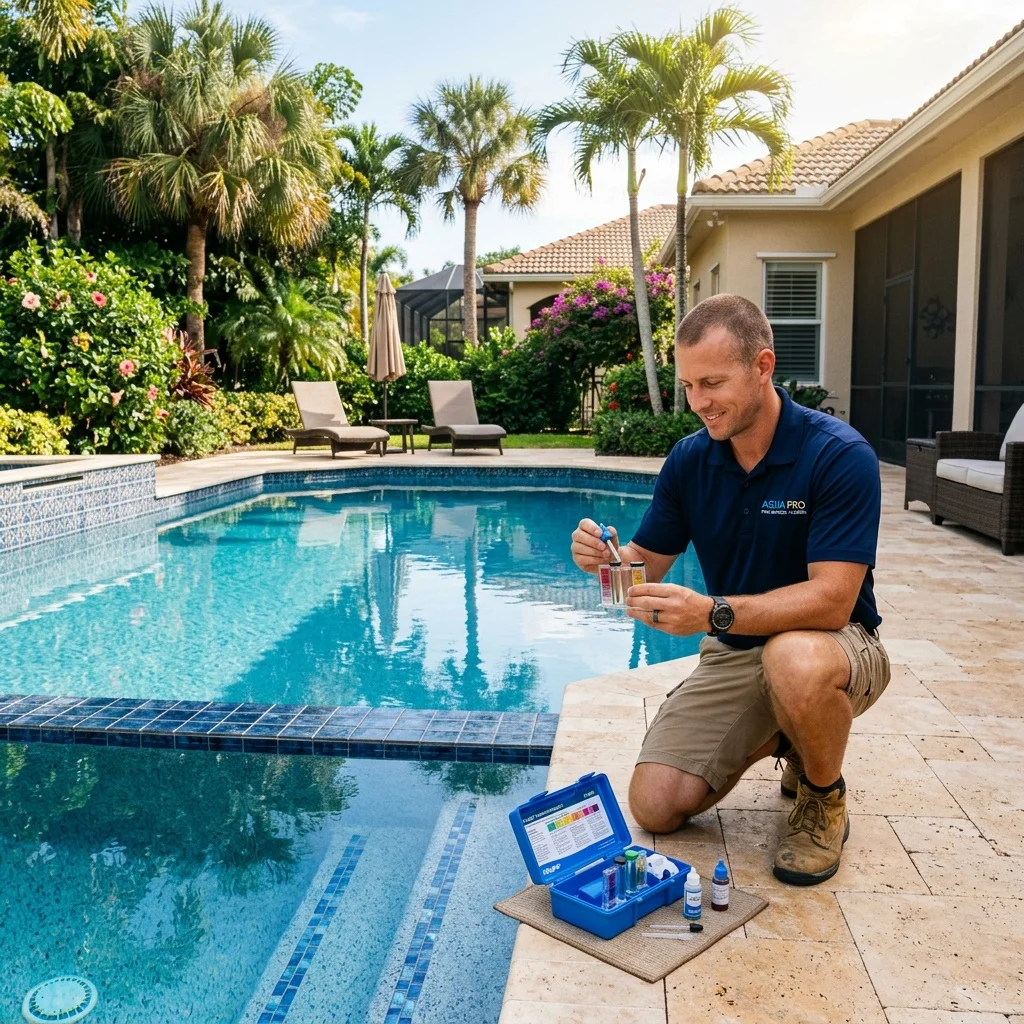
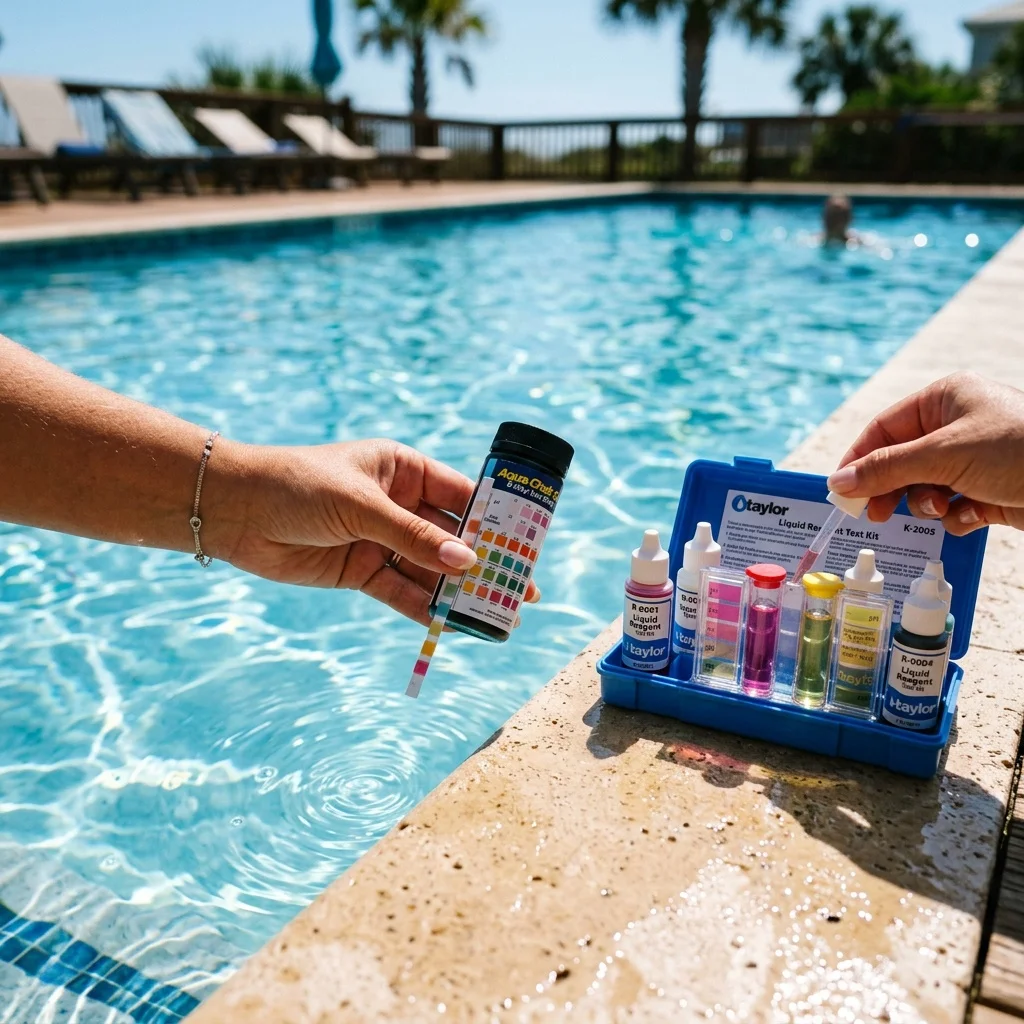
The only way to know for sure is to test. Standard pool test strips don't measure phosphates. You need either a phosphate test kit (Hach makes a good one for $20 to $40) or a sample tested at a pool supply store that uses a digital meter.
Test 2 to 4 times a year, especially in late spring and after any major storm or fertilization event.
What Actually Removes Phosphates
You can't sanitize phosphates away. Chlorine doesn't touch them. The fix is chemical removal.
Phosphate removers (PhosFree, Phos-Free, Natural Chemistry, etc.). These bind to phosphates in the water and drop them out as a white precipitate. Your filter then captures the precipitate. Cost: $20 to $50 a bottle, treats a typical 15,000-gallon pool.
How to use them:
- Test first. Know your starting number.
- Add the recommended dose for your pool size.
- Run pump for 24 to 48 hours.
- Clean the filter heavily (the captured phosphate sludge clogs filters fast).
- Retest. Often takes 2 or 3 rounds to get from 800 ppb down to under 100 ppb.
Treating a phosphate problem is not a one-time deal. Once you've cleared the existing phosphates, new ones keep coming in. Plan to maintain low phosphates rather than reach zero once and forget.
Prevention Beats Treatment Every Time
Five habits that keep phosphates low year-round.
1. Be selective about lawn fertilizer near the pool. If your sprinklers spray pool deck or close to the pool, switch to a low-phosphorus fertilizer (look for "phosphate-free" labels) in those zones.
2. Empty skimmer baskets twice a week in fall. Decomposing oak leaves in the basket leach phosphates back into the water. Don't let them sit.
3. Keep mulch beds well-bordered. Wind-blown mulch dust adds up.
4. Clean filters more often than you think you need to. A clogged filter that's pushing dirty water back through is a phosphate redistributor.
5. Run a low-dose phosphate remover quarterly. Especially heading into summer. A maintenance dose of phosphate remover every 3 months keeps your baseline low and makes occasional algae blooms much easier to recover from.
Specific Cases in St. Johns
Some specific patterns we see across the county.
New construction phases (Shearwater, RiverTown, SilverLeaf): Heavy initial sod fertilization in surrounding yards drives phosphates up for the first 12 to 18 months after move-in. Test more often during this window.
Mature wooded properties (Fruit Cove, Julington Creek): Oak debris is the dominant source. Annual filter deep cleans plus quarterly phosphate maintenance does most of the work.
Coastal homes (Ponte Vedra, St. Augustine Beach): Salt-air debris adds organic load. The main pollen and oak issue is less severe, but ocean-driven storms occasionally dump unusual debris loads.
Older established neighborhoods (Mandarin, San Marco, Avondale): Often have larger mature trees, less fertilizer pressure but more organic debris. The mix changes the testing rhythm but not the conclusion.
The Quiet Cost of Ignoring Phosphates
Algae recovery jobs run $300 to $600 each. A phosphate test kit costs $30. A bottle of phosphate remover costs $40. The math is obvious in retrospect, frustrating in real time.
If you've had two algae blooms in a season, your phosphates are almost certainly part of the problem. Stop chasing chlorine. Test phosphates. Treat them. Watch how much easier the rest of the season gets.
Want a phosphate test and water analysis as part of your weekly service? Book a pool service in St. Johns, FL and we'll handle phosphate testing as part of every visit, with quarterly remediation built in.