Why Weekly Maintenance Matters (Even More in St. Johns)
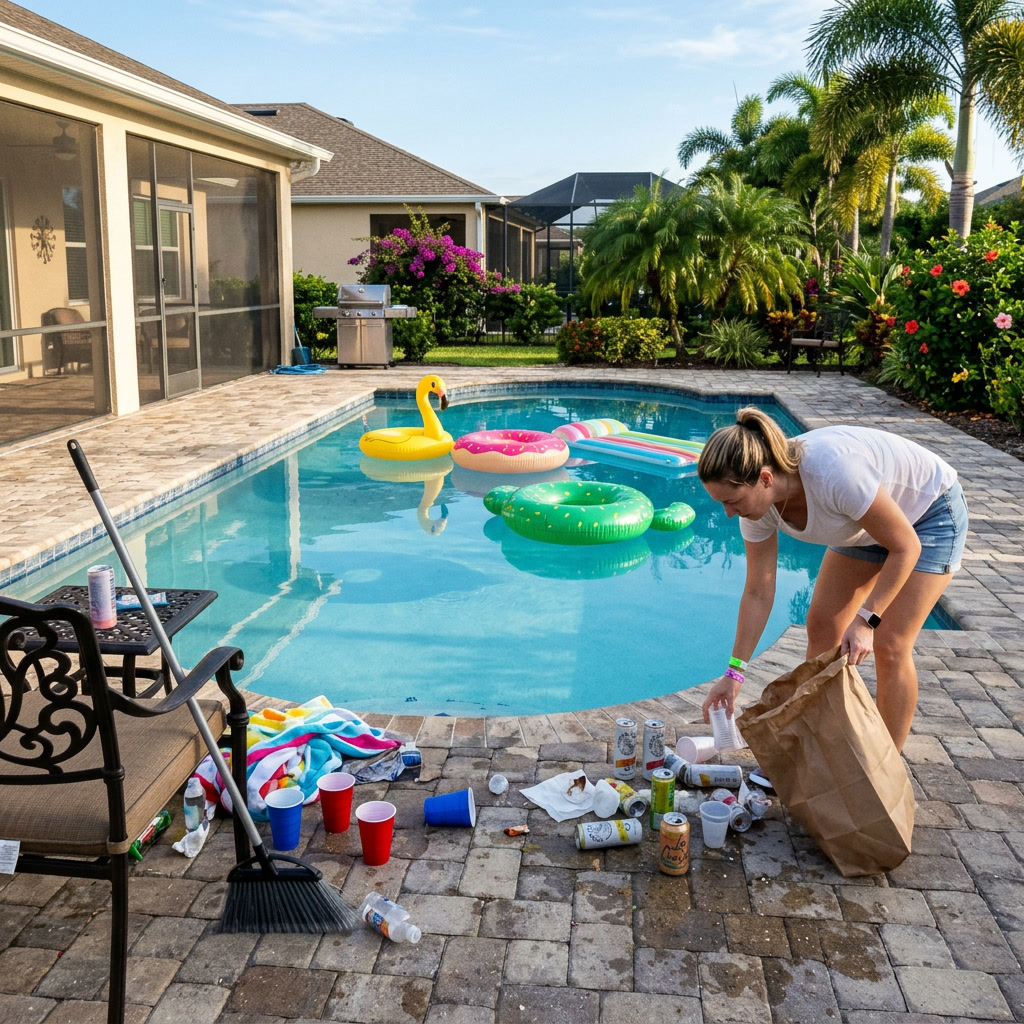
Owning a pool in Nocatee, Fruit Cove, Julington Creek, RiverTown, Shearwater, or anywhere across St. Johns County is one of the best parts of living here. It also comes with weekly responsibility. A consistent maintenance routine is the single most important thing you can do to keep the pool clean, safe, and long-lasting. Skip a week and you might not notice. Skip two and you could be dealing with cloudy water, algae growth, or equipment problems that cost hundreds to fix.
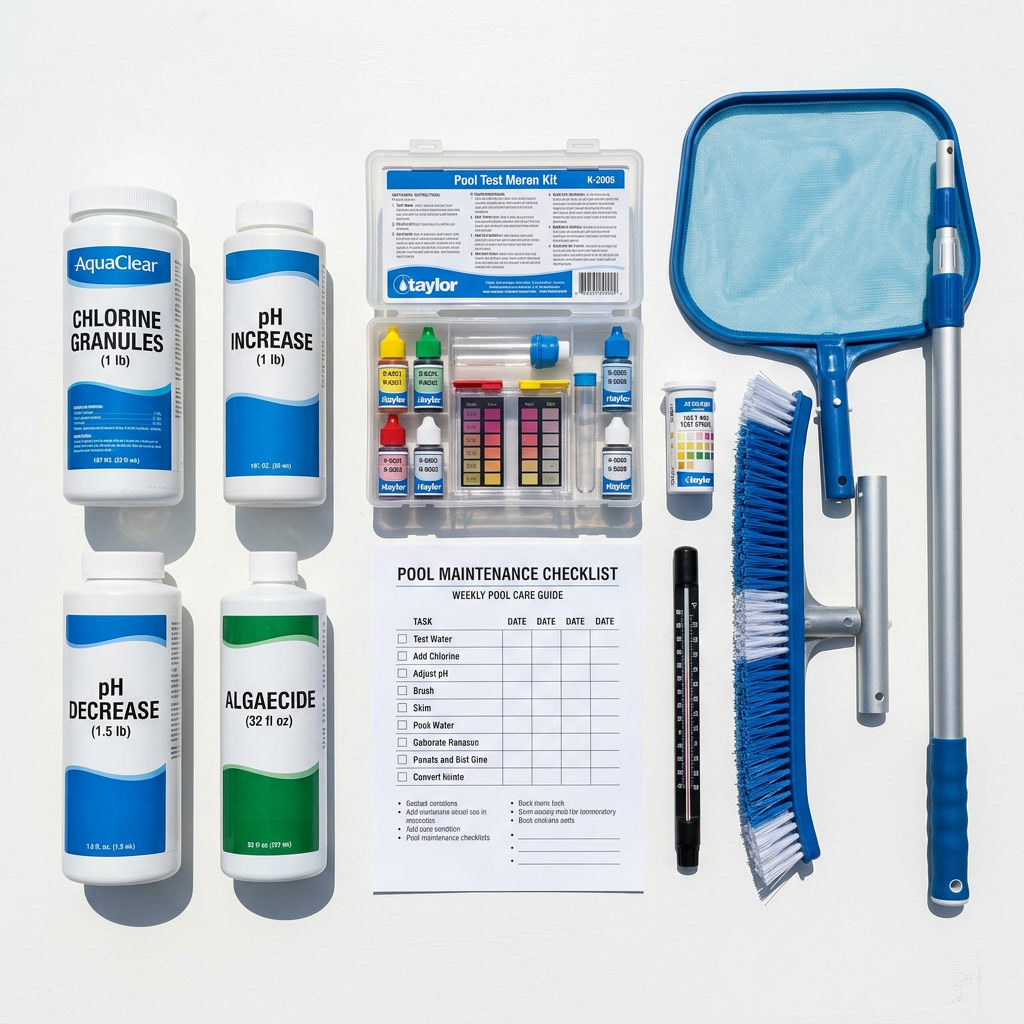
This checklist covers every task that should be performed on a weekly basis. Whether you handle pool maintenance yourself or hire a professional, use this as your guide to ensure nothing gets missed.
Step 1: Skim the Surface
Time: 5-10 minutes
Start by skimming the entire water surface with a leaf net or skimmer. Remove all visible debris including leaves, bugs, pollen, grass clippings, and anything else floating on top.
Why this matters: Debris left on the surface eventually sinks to the bottom, where it decomposes, releases phosphates, and creates the perfect environment for algae growth. It's much easier to remove debris while it's still floating.
Pro tip: If you have a lot of trees near your pool, consider skimming every other day rather than just once per week, especially during fall when live oaks in Northeast Florida drop leaves heavily.
Step 2: Empty Skimmer and Pump Baskets
Time: 5 minutes
Check and empty both the skimmer basket (built into the side of the pool) and the pump strainer basket (located at your pool equipment pad). Remove any debris, leaves, or foreign objects.
Why this matters: Clogged baskets restrict water flow through your filtration system. Reduced flow means poor filtration, higher energy costs, and can even cause your pump to overheat and burn out. A clean basket ensures your system operates at peak efficiency.
Pro tip: While you have the pump lid off, check the O-ring for cracks or dryness. A worn O-ring causes air leaks that reduce pump performance. Apply a thin coat of silicone lubricant if it looks dry.
Step 3: Brush the Walls, Steps, and Tile Line
Time: 10-15 minutes
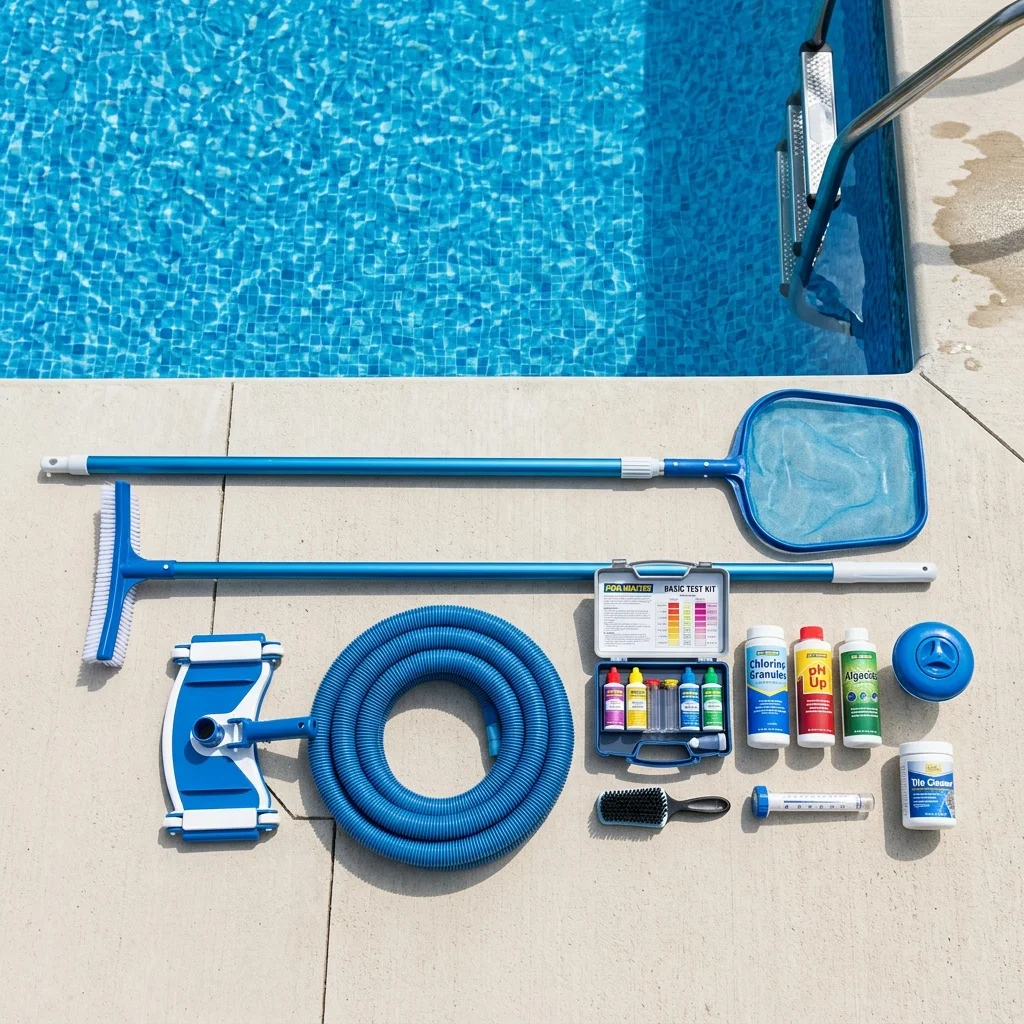
Using a pool brush appropriate for your surface type, brush the walls from the tile line down, all steps and benches, ladders, and any corners or crevices where algae tends to accumulate. For plaster and concrete pools, use a stainless steel bristle brush. For vinyl, fiberglass, or painted surfaces, use a nylon brush.
Why this matters: Algae begins as an invisible biofilm on surfaces before it becomes the green, slimy growth you can see. Brushing disrupts this biofilm and pushes contaminants into the water column where your sanitizer can eliminate them. Even pools with automatic cleaners need manual brushing because robots miss corners, steps, and behind ladders.
Focus areas to never skip:
- Behind ladders and handrails
- Inside the skimmer throat
- The waterline tile
- Steps and bench seats
- Around return jets and light niches
Step 4: Vacuum the Pool Floor
Time: 15-25 minutes
Vacuum the entire pool floor to remove settled debris. You can use a manual vacuum connected to your skimmer, an automatic suction-side cleaner, a pressure-side cleaner, or a robotic pool cleaner.
If you're vacuuming manually, work in slow, overlapping strokes. Moving too quickly stirs up debris without actually capturing it. If the pool is very dirty, vacuum to waste (bypassing the filter) to avoid overloading your filtration system.
Why this matters: Debris on the pool floor decomposes and creates staining, introduces phosphates that feed algae, and makes the pool look uninviting. Regular vacuuming keeps the floor spotless and reduces the overall chemical demand of your pool.
Step 5: Test and Balance Water Chemistry
Time: 10 minutes
This is the most important step of your weekly maintenance. Test your water using a reliable test kit or test strips, checking at minimum:
Free Chlorine: 2-4 ppm
Chlorine is your primary sanitizer. It kills bacteria, viruses, and algae. Below 2 ppm, your pool is vulnerable to contamination and algae growth. Above 5 ppm, it can cause skin and eye irritation.
Adjustment: Add liquid chlorine or granular shock to raise levels. To lower chlorine, you can let it dissipate naturally (sunlight breaks down chlorine) or use a chlorine neutralizer for faster results.
pH: 7.4-7.6
pH measures how acidic or basic your water is. This is arguably the most critical number because it affects everything else. At proper pH, chlorine is most effective, water is comfortable for swimmers, and your pool surfaces are protected.
Adjustment: Use muriatic acid or sodium bisulfate to lower pH. Use sodium carbonate (soda ash) to raise pH.
Total Alkalinity: 80-120 ppm
Alkalinity acts as a buffer for pH, preventing it from swinging wildly. If alkalinity is too low, your pH will be unstable and hard to control. If too high, pH tends to drift upward and the water may become cloudy.
Adjustment: Use sodium bicarbonate (baking soda) to raise alkalinity. Use muriatic acid to lower it.
Cyanuric Acid (Stabilizer): 30-50 ppm
Stabilizer protects chlorine from being destroyed by UV sunlight. In Jacksonville's intense sun, unstabilized chlorine can be depleted in just a few hours. However, too much stabilizer reduces chlorine's effectiveness, a condition known as "chlorine lock."
Adjustment: Add cyanuric acid to raise levels. The only way to lower stabilizer is to partially drain and refill the pool with fresh water.
Step 6: Check the Filter Pressure
Time: 2 minutes
Read the pressure gauge on your filter. Every filter has a "clean" baseline pressure, typically between 8-15 PSI depending on your system. When the pressure rises 8-10 PSI above your clean baseline, it's time to clean the filter.
- Cartridge filters: Remove and hose off the cartridge, or soak in filter cleaner solution
- Sand filters: Backwash until the sight glass runs clear
- DE filters: Backwash and recharge with fresh diatomaceous earth
Why this matters: A dirty filter can't properly clean your water, and excess pressure puts strain on your pump and plumbing. Regularly monitoring pressure helps you time filter cleanings perfectly.
Step 7: Inspect Equipment
Time: 5 minutes
Take a quick walk around your equipment pad and check for:
- Leaks: Look for wet spots on the ground, dripping connections, or spray from fittings
- Unusual noises: Grinding, screeching, or humming from the pump may indicate bearing failure or debris in the impeller
- Timer and automation settings: Verify your pump is running the correct number of hours (typically 8-12 hours per day in Jacksonville summers, 6-8 hours in winter)
- Salt cell (if applicable): Check the cell for calcium buildup and inspect the flow indicator
Why this matters: Catching small equipment issues early prevents expensive failures. A minor leak today could become a burst pipe next month.
Step 8: Record Everything
Time: 2 minutes
Keep a log of your chemical readings, any adjustments made, filter pressure, and any observations about equipment or water appearance. This history is invaluable for troubleshooting problems and helps your pool technician make better decisions about your pool's care.
Monthly Add-Ons
In addition to your weekly routine, these tasks should be done monthly:
- Phosphate test: Phosphates feed algae. If levels exceed 300 ppb, treat with a phosphate remover.
- Calcium hardness test: Target 200-400 ppm. Low calcium causes etching of plaster surfaces; high calcium causes scale buildup.
- Inspect pool cleaner: Check hoses, bags, and moving parts for wear.
- Clean the waterline: Use a tile cleaner to remove calcium deposits and oils from the waterline tile.
When to Call a Professional
Some tasks are best left to the pros. Contact a pool professional if you notice:
- Persistent green or cloudy water despite proper chemical readings
- Equipment making unusual noises
- Visible cracks in the pool shell or deck
- Consistently unstable chemistry that you can't get under control
- Any electrical issues with pool lighting or equipment
Don't have time for weekly pool maintenance? RightWay Pool provides comprehensive weekly service throughout Jacksonville and St. Johns County. Our trained technicians handle every item on this checklist and more, so you can spend your time enjoying the pool instead of maintaining it. Get a free estimate today.