The Dark Spots That Won't Brush Off
You're swimming on a Sunday morning and you notice a dark spot on the wall near the deep end. Looks like dirt. You brush it. It barely moves. You brush harder. It stays put.
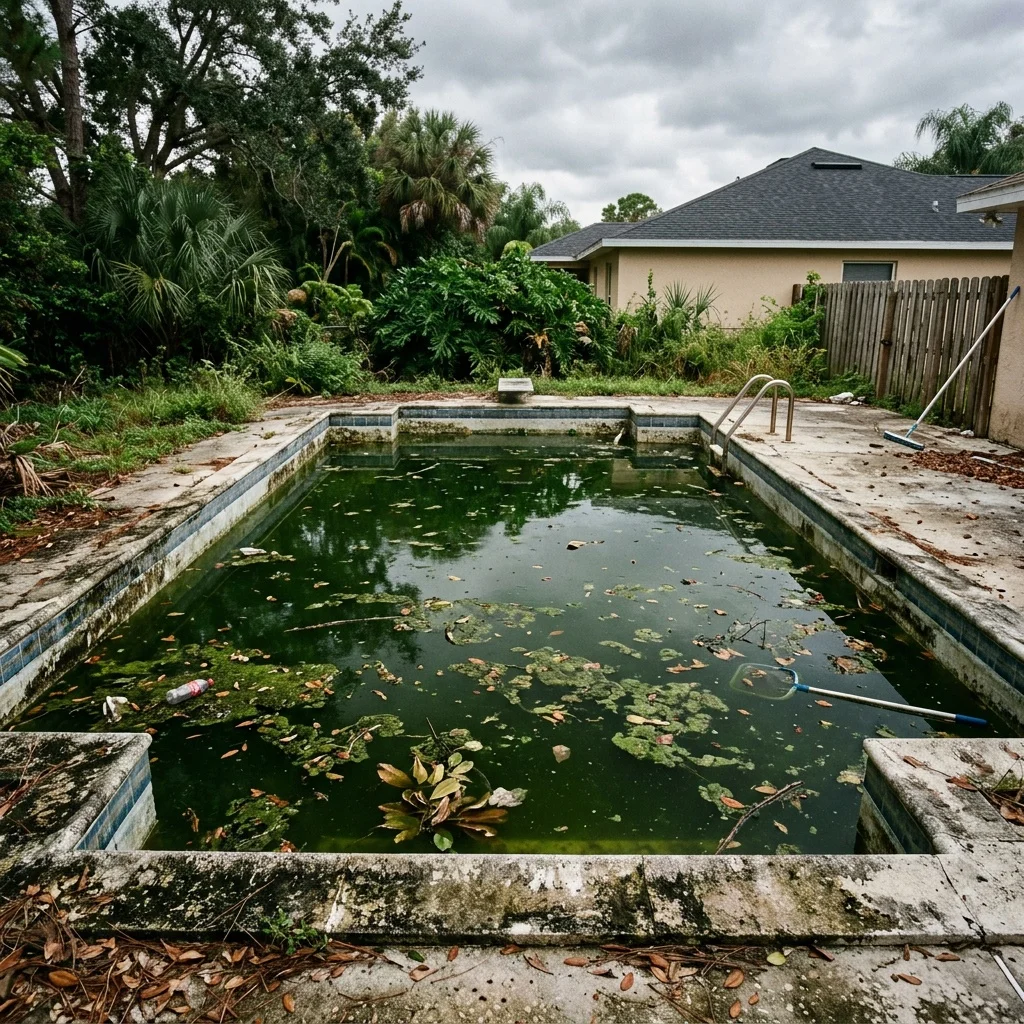
If you can't brush it off and it's been there more than a week, you're probably looking at black algae. It's the worst algae problem a St. Johns pool can develop, and the only one that defeats normal pool chemistry.
Here's what it actually is, why it's so hard to kill, and the full protocol that works (when it works).
What Black Algae Actually Is
Black algae isn't really algae in the everyday sense. It's a cyanobacteria with a hardened protective layer on top. The dark spots you see are colonies that have anchored themselves into porous surfaces (plaster, grout, pebble finish) and grown a calcium-carbonate shell that protects them from chlorine.
Three traits that make it brutal:
- It roots into surfaces. Like a weed in a sidewalk crack. You can't brush off the part underneath.
- It survives normal chlorine. The protective shell shrugs off free chlorine up to about 10 ppm. Routine shocking doesn't faze it.
- One spot reseeds the whole pool. Even if you kill 95 percent of a colony, the surviving 5 percent regrows in 2 to 3 weeks. You either kill it completely or you'll see it again.
Why It Shows Up in St. Johns Pools
Black algae usually arrives one of three ways:
Transferred from natural water. Lake water, river water, ponds, ocean water. A swim toy that was in a pond, a kayak that hadn't fully dried, a kid who jumped from a boat trip to the home pool. The spores hitchhike.
From rough or aged plaster. Black algae roots into porous surfaces. New, smooth plaster resists it. Plaster older than 8 years with visible roughening or pitting is vulnerable.
Low circulation areas with shade. Black algae prefers shaded corners with poor water movement. The deep-end corner that the return jet doesn't reach. Behind the ladder. Under the steps.
In St. Johns, the most common scenario is a pool with 10+ year old plaster where the homeowner took a vacation that included a lake or river swim, came home, and seeded the pool with spores from a wet pair of trunks.
The Kill Protocol
This is one of the cases where doing it wrong wastes time and money. Do every step or don't bother starting.
Day 1: Diagnose and prep
- Confirm it's black algae. Try a 90-degree wall brush with the stainless brush specifically (not the soft nylon). Black algae won't budge; dirt will lift partially. Use a thumbnail (rinse first) and try to scrape the spot. If it scrapes off but leaves a discolored shadow underneath, that's the algae's anchored root system.
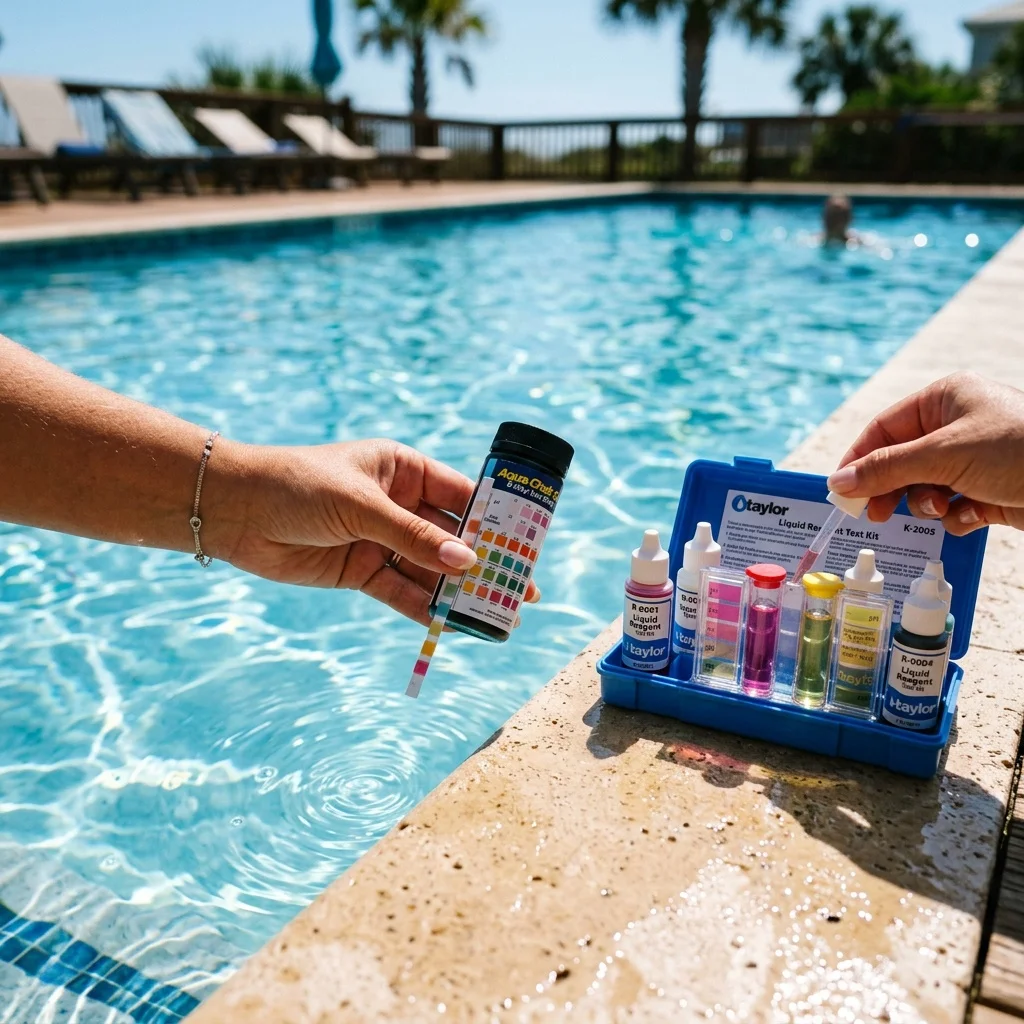
- Test CYA. If it's over 80, plan a partial drain before continuing. You won't be able to break through with chlorine if CYA is too high.
- Get pH to 7.4 to 7.6.
- Test phosphates. If over 500, treat with phosphate remover first. Algae regrows from phosphate-rich water no matter how well you kill it.
- Clean the filter thoroughly.
Day 2: Physical attack first
Black algae has to be physically broken open before chemicals can reach it. This is the step everyone skips and then complains the protocol "doesn't work."
- Use a stainless-bristle pool brush (designated for this; never use it on vinyl liners).
- Scrub every visible black spot with significant pressure. Multiple passes, multiple directions. You're trying to break the protective shell, not just clean the surface.
- For stubborn spots on plaster, rub each one with a chlorine tablet (gloves on). The direct contact with the tablet erodes the shell. Leave a small piece of tablet sitting on each spot if possible.
- Brush again after 30 minutes of tablet contact.
Day 3: Heavy shock
- Shock the pool to 30 to 40 ppm free chlorine. For a 20,000 gallon pool, about 5 to 6 gallons of 12.5 percent liquid chlorine.
- Add a black-algae-specific algaecide. Most are copper-based. Follow label directions carefully.
- Brush every spot again at sunset.
- Run pump continuously for 24 hours.
Day 4 to 5: Maintain and rebrush
- Keep free chlorine at 10+ ppm.
- Brush every black spot daily.
- Re-shock if chlorine drops below 8 ppm.
- The spots should start fading from black to brown to gray, then disappear.
Day 6: Filter clean and gear decontamination
- Clean the filter thoroughly. Cartridges get a chemical soak in TSP solution.
- Brushes, leaf rakes, poles: 10-minute bleach soak.
- Pool toys: bleach soak.
- Swimsuits and floats used during the bloom: hot wash with bleach.
Day 7 to 14: Watch
- Hold free chlorine at upper-normal (4 to 5 ppm).
- Brush daily for the first week.
- If any spot reappears, hit it immediately with the tablet treatment.
Day 21: Final assessment
If you make it three weeks without regrowth, you've broken the cycle. Most failures show up between days 14 and 21.
What Makes the Difference Between Success and Failure
I've seen homeowners do all the right chemistry and still fail because they skipped one of these:
Inadequate brushing. The shell has to break. Soft brushing doesn't work. Stainless bristle, hard pressure, multiple passes.
CYA too high. Most pools with chronic black algae have CYA over 90. Without a partial drain to bring it down, no amount of chlorine reaches the colonies.
Skipping the tablet contact. The direct tablet-on-spot technique is the part that actually works for stubborn spots on rough plaster. Skipping it usually means the spot comes back within a month.
Not decontaminating gear. Pool brushes, leaf rakes, swimsuits, and floats can reseed the pool 2 weeks later. If you don't bleach-soak everything that touched the pool during the bloom, you'll fight it again.
Not addressing phosphates. Black algae in a phosphate-rich pool is fighting two battles. Treat phosphates first.
When Plaster Is the Real Problem
Sometimes the pool surface itself is the issue. If your plaster is:
- More than 10 years old.
- Visibly rough to the touch.
- Already pitted or showing aggregate.
- Stained gray or brown in patches even after a clean cycle.
You may need to resurface the pool to permanently solve the black algae problem. Patches in old, porous plaster are reinfection points no chemistry will fully cure. Resurfacing runs $5,000 to $12,000 for a typical St. Johns pool but eliminates the issue.
Prevention After You've Killed It
If you've successfully cleared black algae and want to keep it from coming back:
- Don't bring lake or river toys to the pool without drying them in the sun for 48 hours first.
- Rinse swimsuits between natural water and pool use.
- Maintain phosphate levels under 200 ppb.
- Hold free chlorine consistently. Pools that swing from 1 to 4 ppm are more vulnerable than pools that hold 3 ppm steady.
- Brush low-circulation corners weekly.
- Consider an algaecide as part of weekly maintenance during summer.
When to Call a Pro Immediately
Three signs to stop DIY and call a service:
- More than 10 visible spots when you confirm it's black algae.
- A spot has come back after a full kill cycle. Means there's something systemic (CYA, phosphates, plaster age) that DIY won't fix.
- You're seeing it on multiple surfaces (walls and steps and grout). At that point you need a real plan, not another bottle of algaecide.
Black algae you can't beat? Book green pool recovery in St. Johns, FL and we'll do a full kill cycle, decontaminate the gear, address phosphates and CYA, and tell you honestly whether your plaster needs resurfacing.